Cooler Powered Reliable: Solar Generator Integration Guide
By Mia Kowalski • 17th Dec
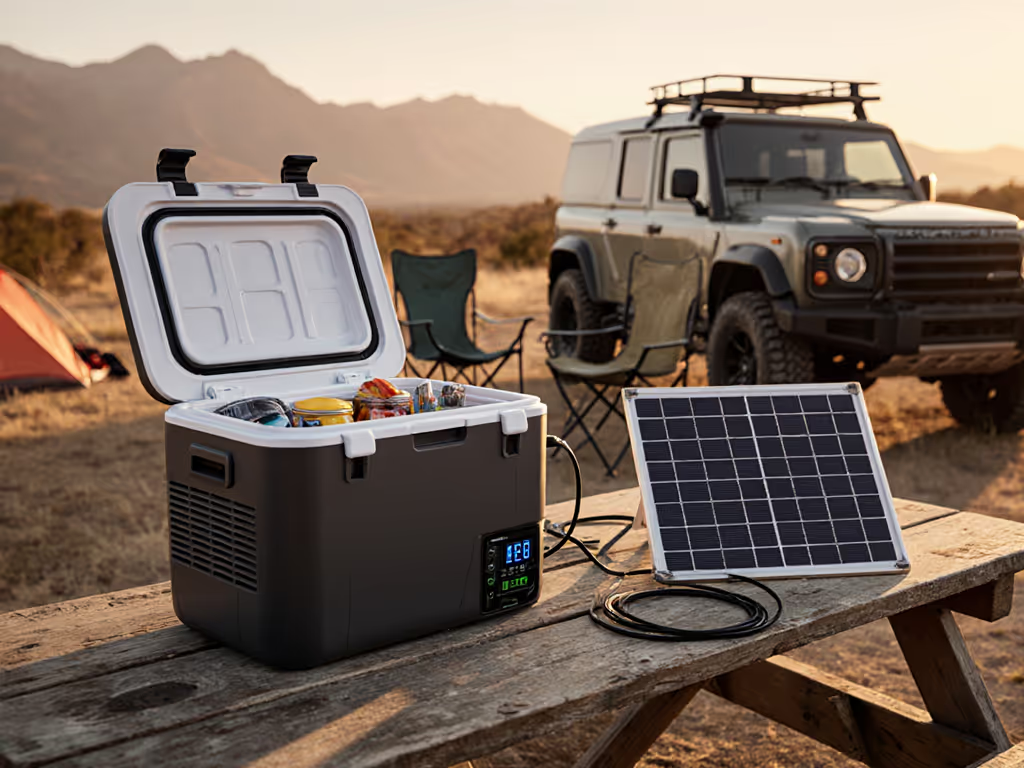
When your cooler stops performing in the heat, it's not just about melted ice, it's about ruined meals, compromised food safety, and disappointed people counting on you. Cooler powered solutions with thoughtful solar generator integration offer a reliable alternative to traditional ice-dependent cooling, especially for extended trips where resupply isn't an option. For proven energy-saving techniques and solar charging setups, see our solar-powered cooler battery guide. This guide focuses on practical implementation that prioritizes people-first service flow over technical specs alone (because a great cooler setup serves people first and numbers second), safely. Whether you're managing a tailgate line, keeping crew lunches cold on a job site, or preserving your hard-earned catch, understanding how to properly integrate renewable power with your cooling system makes all the difference between chaotic scramble and seamless service.
Understanding What "Cooler Powered" Really Means
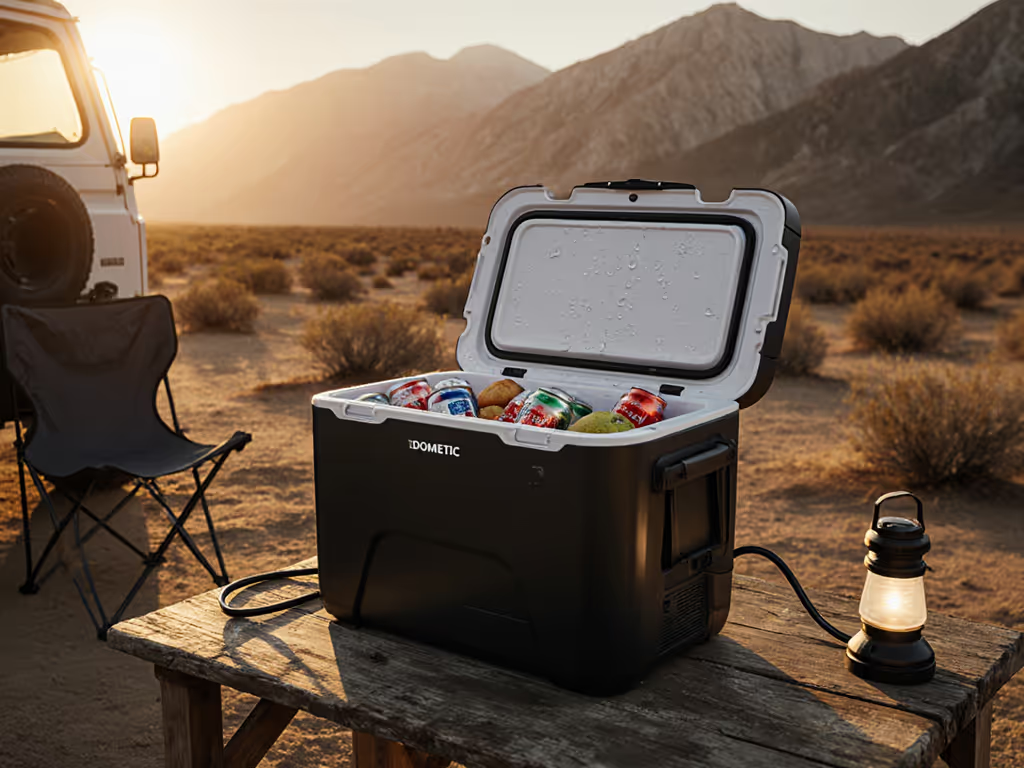
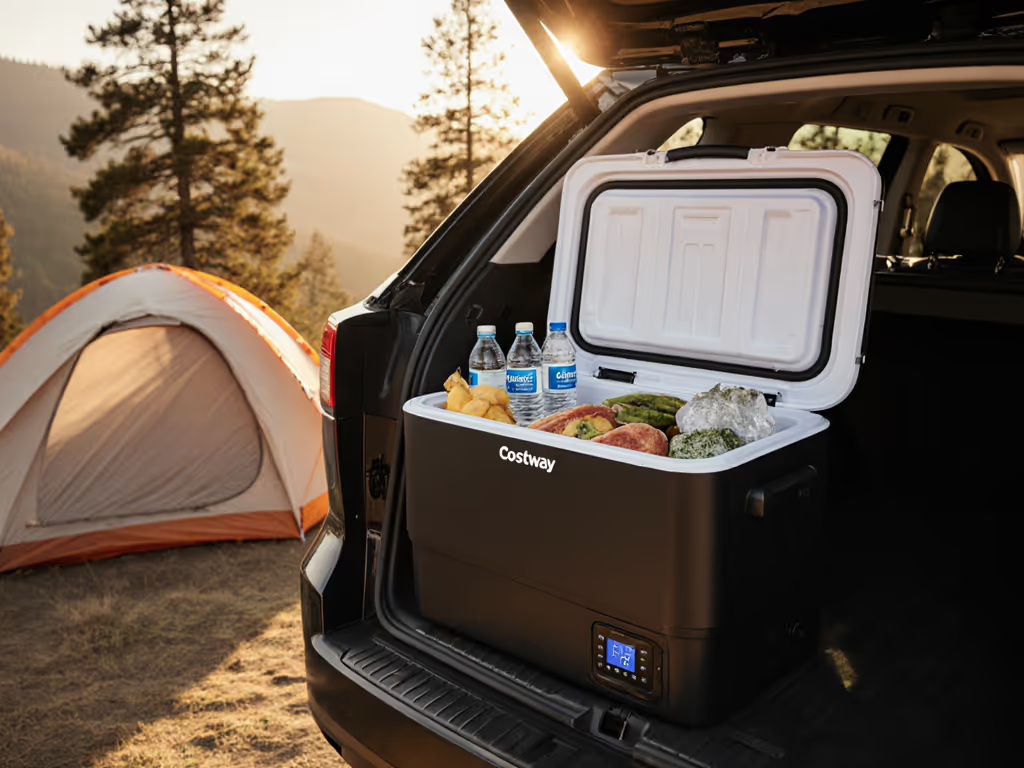
"Cooler powered" isn't just about plugging in a device: it's about creating a reliable cold chain that maintains food safety while optimizing human workflow. Many outdoor enthusiasts assume they need massive solar setups, but practical off-grid power solutions often require less capacity than expected when properly matched to your specific cooler and usage pattern.
Consider these reality checks:
- Your 12V cooler likely draws 30-60W when running, not its maximum wattage continuously
- Intermittent compressor operation (cycling on/off) dramatically reduces total energy consumption
- Pre-chilled contents significantly decrease initial power demands
- Strategic shade placement cuts energy needs by 30-40%
I remember my first big tailgate where the cooler line stretched endlessly. After rethinking the setup with zones (drinks on one side, lunch fixings staged up top, and a pour-through spigot), I realized proper energy management was about flow, not just capacity. Cleanup took ten minutes, not an hour. That experience cemented my approach: design for people, not just power specs.
Designing Your System: Compatibility and Capacity
Matching Power Needs to Your Cooler
Before selecting equipment, calculate your actual energy requirements:
- Check your cooler's wattage rating (typically 30-90W for 12V models)
- Estimate daily runtime (the compressor doesn't run constantly)
- Add 20% buffer for hot days and frequent opening
For a standard 50-quart electric cooler running 12 hours daily in moderate heat, you're likely looking at 300-400 watt-hours daily, well within range of compact portable power station compatibility options. If you're still choosing a unit, our electric cooler review compares power consumption, cooling capacity, and reliability to match a model to your watt-hour budget. Larger crew coolers serving 10+ people might need 600-800 watt-hours, but never size up based on worst-case scenarios alone.
Great cooler setups serve people first, stats second. An oversized generator becomes dead weight that slows your service flow and complicates transport.
Essential Components Checklist
- Power station: Match capacity to your cooler's daily needs (not maximum output)
- Solar panels: 100-200W typically sufficient for single-cooler setups
- Cables: Use manufacturer-recommended gauges to prevent voltage drop
- Monitor: Built-in display showing remaining capacity (critical for planning)
When I evaluate portable power station compatibility for cooler applications, I prioritize units with reliable 12V output (not just AC), clear state-of-charge indicators, and ergonomic handles (because in the field, you're carrying this equipment to where cooling is needed most).
Safety First: Maintaining the Cold Chain
Electric coolers only maintain food safety if properly powered: intermittent operation risks temperature spikes that compromise food. For precise 2-8°C control and risk management, see our medical cooler guide. Consider these non-negotiables:
- Always pre-chill your cooler and contents before departure
- Position the power station in shade (heat reduces battery efficiency)
- Use a separate thermometer to verify internal temperatures
- Never let battery drop below 20% capacity in critical cooling applications
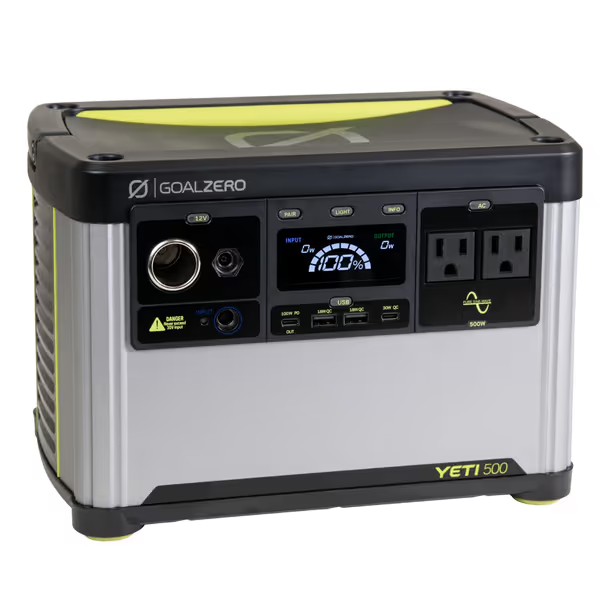
Goal Zero Yeti 500 Portable Power Station
Reliable, fast-charging power for off-grid adventures and emergencies.
$374.89
Battery Lifespan4,000+ cycles (10+ years daily use)
Battery Lifespan4,000+ cycles (10+ years daily use)
Pros
Powers essential gear with 500W AC, 1000W surge.
Upgraded LiFePO4 battery for exceptional longevity.
Recharge to 100% in 90 minutes with high-speed mode.
Durable, water-resistant (IPX4) build for any environment.
Cons
Battery life performance may vary in real-world use.
Durability claims receive mixed long-term reviews.
Customers find the portable power station well-built, lightweight, and functional, with one customer noting it can run all equipment through the night.
Customers find the portable power station well-built, lightweight, and functional, with one customer noting it can run all equipment through the night.
Food safety isn't negotiable, and neither is reliable power. That Goal Zero Yeti 500 mentioned above provides consistent voltage output that compressor coolers require, unlike some budget units that throttle power when battery gets low. When your crew's health depends on proper temperatures, component reliability matters more than headline wattage numbers.
People-First Implementation: Your Setup Flow
The most efficient solar generator integration plans prioritize human factors over technical perfection. Here's my recommended workflow:
Pre-Departure Checklist (15 Minutes)
- Charge power station to 100% (solar if possible)
- Pre-chill cooler interior and contents to 35°F (2°C)
- Position solar panel where it will receive maximum morning sun
- Label all connections clearly ("Cooler," "Solar," "Spares")
Service Day Protocol
- Zone 1 (Top): Lunch fixings and frequently accessed items
- Zone 2 (Middle): Drinks requiring consistent cold
- Zone 3 (Bottom): Emergency reserves and less frequently accessed items
During extended service periods, I implement a "cold cache" system (keeping backup items in a shaded, insulated container that only gets opened during scheduled resupply moments). This strategy minimizes temperature spikes while maintaining service speed.
Energy Management for Coolers: Working Smarter
Strategic energy management for coolers involves more than just sufficient wattage. Consider these often-overlooked factors:
- Opening frequency: Each opening adds 5-10 minutes of compressor runtime
- Air gaps: Minimize empty space to reduce cooling load
- Thermal mass: Frozen water bottles act as cold buffers while providing hydration
- Panel placement: Angle solar panels toward midday sun for maximum collection
Pro tip: In extreme heat, create a "cooling buffer zone" between your solar panel and power station using a reflective sunshade. For condition-specific tactics, use our extreme climate cooler guide to adapt for desert heat, arctic cold, and high humidity. This prevents the power station from overheating, which can reduce its efficiency by up to 25%.
When temperatures climb, I've found that staggering cooler access (designating specific times for crew refreshment) reduces total energy consumption by 15-20% compared to constant access. This simple behavioral adjustment creates more reliable extended cooling systems without adding hardware.
Real-World Adaptation: When Plans Change
The best solar generator integration plans include contingency options:
- Option 1: Carry a compact 50W solar panel as backup (fits in most glove compartments)
- Option 2: Identify resupply points along your route with standard vehicle charging
- Option 3: Implement a "cooling conservation mode" when power runs low (reduced access frequency)
During a recent worksite deployment, when unexpected heat reduced our solar collection efficiency, we switched to a two-cycle cooling pattern: 4 hours of active cooling followed by 2 hours of "thermal hold" with minimal openings. This adaptation extended our power station's effective runtime by 30% without compromising food safety.
Maintenance and Tear Down
True reliability includes efficient recovery. Design your cooler powered setup with teardown in mind:
- Drain cooling condensation before disconnection
- Wipe down all connections before storage
- Store power station at 50-80% charge for longevity
- Clean solar panels with microfiber cloth To keep the cooler itself fresh and long-lasting, follow our cooler maintenance guide.
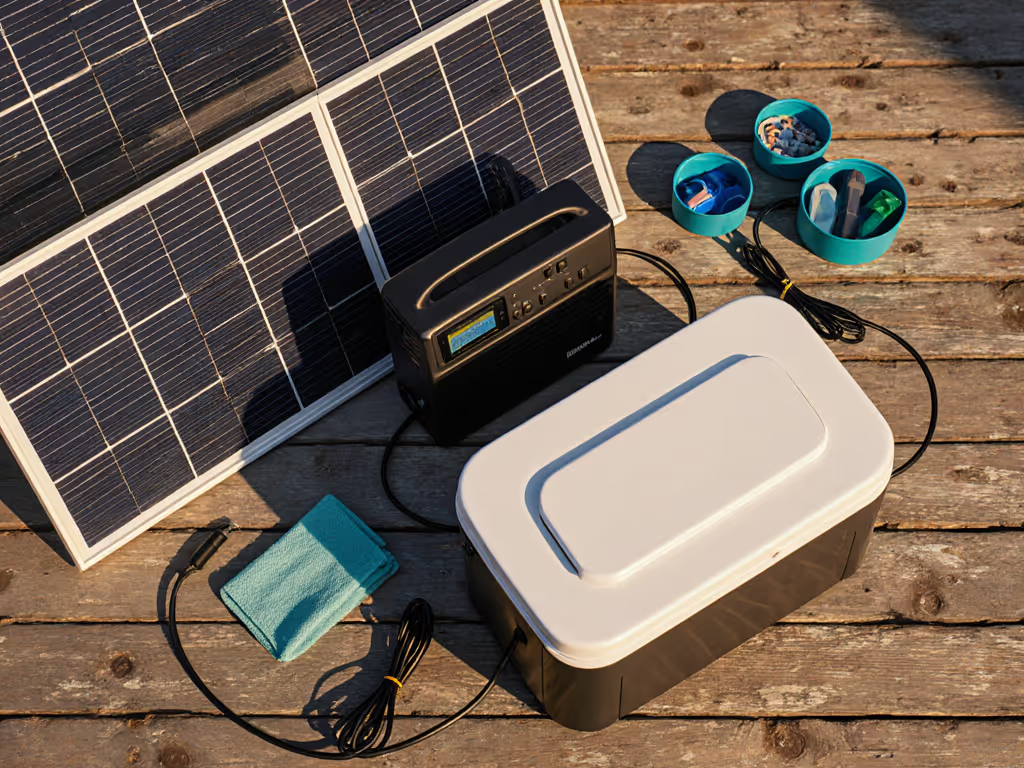
Ten minutes to teardown, or it is not worth it. That principle applies equally to your power system as it does to your cooler organization. If disassembly takes longer than this, you've created unnecessary complexity that will discourage repeat use.
Final Thoughts: Powering Reliability
Effective solar generator integration transforms your cooling from a source of anxiety to a reliable system you can count on. When you prioritize people-first design (considering access patterns, service flow, and actual energy needs rather than just headline specs), you create setups that perform consistently where it matters most.
Don't let complicated diagrams or over-engineered solutions intimidate you. Start small with a single-cooler setup, learn your actual energy patterns, and expand only as needed. For those ready to explore deeper, our companion guide "Electric Cooler Energy Calculators: Matching Power to Your Specific Trips" breaks down precise watt-hour requirements by cooler size, contents, and climate conditions, helping you select exactly what you need without overspending on unnecessary capacity.
The goal isn't maximum power: it is reliable cold exactly where and when your people need it, with cleanup so simple it encourages repeat use. Great cooling isn't measured in ice pounds retained or watt-hours deployed, it is measured in satisfied people, safe food, and stress-free service flow from first pour to final teardown.