2:1 Ice Ratio: Soft Cooler Performance Guide
By Ayo Okonkwo • 3rd Oct
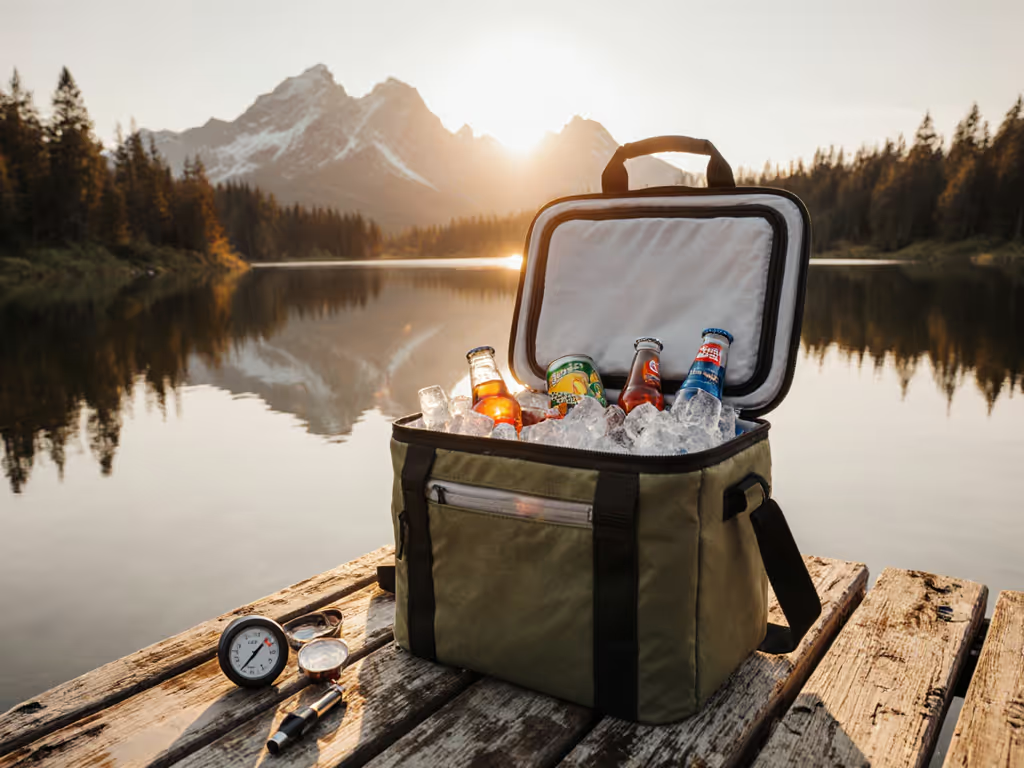
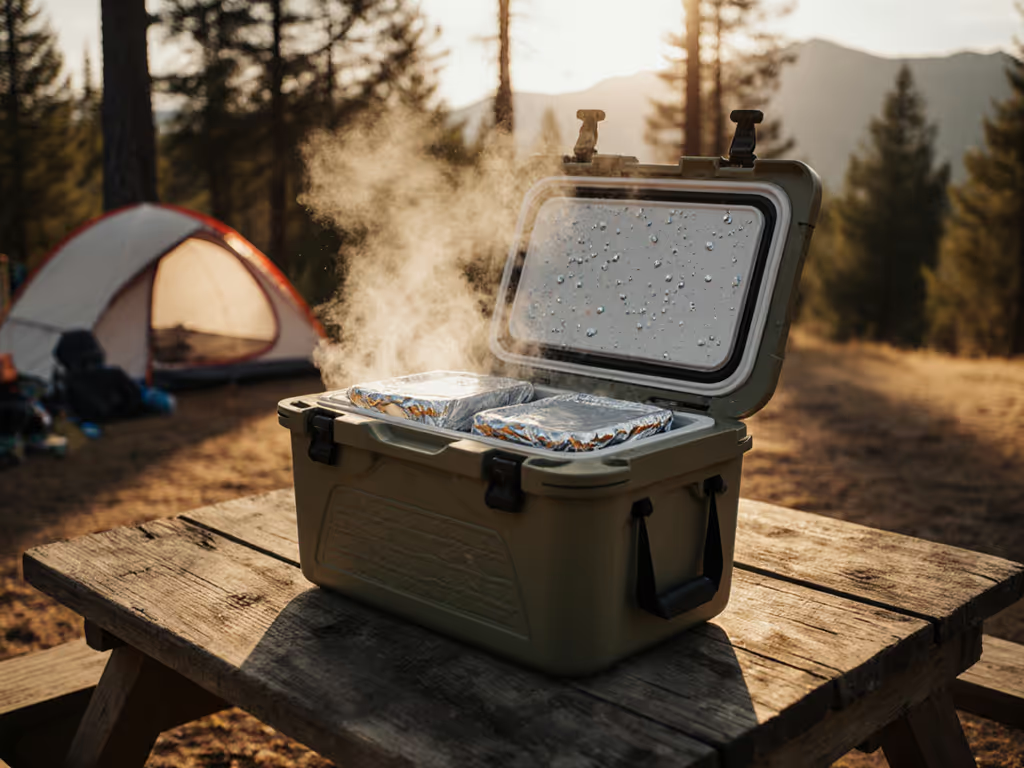
When your crew's productivity hinges on reliable cold on a 102°F jobsite or a week-long fishing charter, optimal cooler ice usage isn't optional, it is operational risk management. For soft ice cooler users, the 2:1 ice-to-content ratio (by volume) is the bedrock of consistent performance. Ignore it, and you'll face melted lunches, safety compromises, and costly downtime. Master it, and you turn cold storage into a predictable workflow asset. Cold chain is part of safety.
Why the 2:1 Ratio Solves Real-World Chaos
Soft coolers excel at portability and space efficiency, but their thinner insulation demands stricter ice discipline than hard-sided models. Most users underpack ice, assuming "a few bags" suffice. Reality check: Ice retention techniques fail when ice-to-content ratios dip below 2:1. Here's why:
- Thermal load math isn't forgiving: Every unit of warm food/drink melts 8x its volume in ice. A single 12 oz soda at 90°F requires 1.25 lbs of ice just to chill to 40°F (before maintaining cold).
- Airflow = meltdown accelerator: Gaps between items let warm air circulate. At 85°F ambient, a 25% air gap cuts hold time by 40% versus a fully packed cooler.
- Jobsite reality: Three lid openings per hour (to grab drinks) + direct sun exposure = ice loss spikes 300%.
Cold that survives chaos is the only cold that counts.
I've seen crews assume their soft cooler failed when packing failed them. On a Gulf Coast asphalt crew last summer, warm coolers triggered a 22-minute productivity drop per hour after lunch. The root cause? A 1:1 ice ratio and unpre-chilled contents. Fixing the ratio alone added 5.3 hours of safe hold time.
Critical Execution: Beyond the Ratio Number
Pre-Chill Like Your Productivity Depends on It (It Does)
Pre-chilling coolers isn't a "pro tip" (it is a non-negotiable step for thermal readiness). Soft coolers absorb heat during transport, turning stored cold into a liability. Do this:
- Overnight chill: Fill with ice cubes 12+ hours pre-trip. Cubes melt faster, pulling thermal energy from insulation 3x quicker than blocks.
- Verify readiness: Drain water, then check interior walls. If condensation forms, chill longer. No condensation = ready state.
- Warm contents sabotage: Loading room-temp drinks? Double your ice budget. Chill all items overnight... this isn't fussiness; it's preventing 18 lb of ice loss per 24 oz growler.
Optimize Ice Types: Block, Cubes, and Strategic Hybrids
Dry ice vs regular ice debates miss the point for soft coolers. Dry ice's -109°F temperature risks melting insulation (avoid unless rated for it). Instead, combine standard ice types strategically:
| Ice Type | Best Use Case | Hold Time Impact |
|---|---|---|
| Block Ice | Base layer (30% of total) | 40% slower melt rate due to low surface area |
| Cubed Ice | Fill gaps + top layer (70% of total) | 23% faster initial cooling; fills voids |
| Rechargeable Packs | Between food/drink zones | Adds 2-4 hours; won't dilute contents |
Field-proven tactic: Layer block ice on the bottom, then packed goods, then cubed ice on top. The cubes create immediate cold immersion while the blocks sustain long-term hold. For crew coolers, add frozen water bottles (counts toward ice volume) to hit the 2:1 ratio. Drain water slowly as it melts to avoid soggy sandwiches.
Separate Food and Hydration: The Morale Multiplier
Mixing raw meat and lunchables isn't just gross, it's a thermal liability. Warm drinks dragged from the top melt ice for everything below. Implement these SOPs:
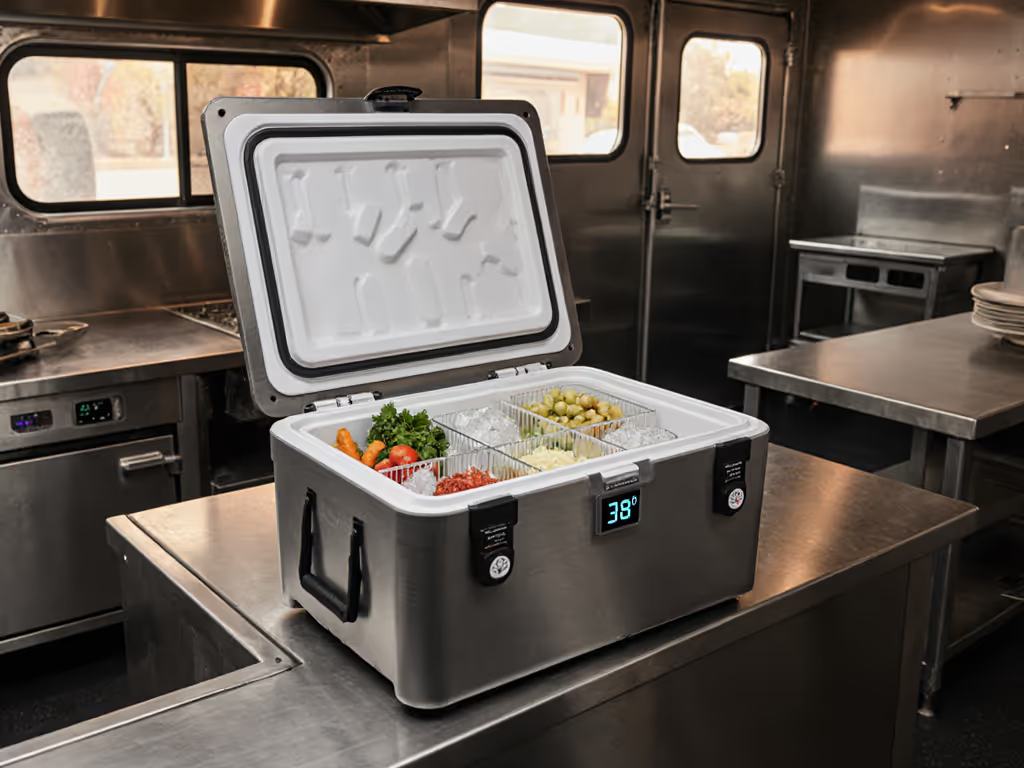
- Dual-zone packing: Bottom ⅔ = food (kept at 34-38°F); top ⅓ = drinks (sacrificed to frequent access).
- Designated access points: One crew member retrieves drinks; others handle food. Reduces lid openings by 65%.
- Shade protocol: Position coolers under job trailers or pop-up canopies. At 95°F, shade extends hold time by 8.2 hours versus direct sun.
Last August, a paving crew's cooler failed before lunch. Morale cratered with productivity. We rebuilt the workflow: pre-chill, shade, strict separation, and a cooler chief. Next week, temps held steady all day. The only complaint? Heavier lids, worth every ounce.
Quantifying the Payoff: Uptime vs. Ice Overhead
Skeptics argue the 2:1 ratio wastes space. Let's pressure-test that:
- Cost of failure: 1 hour of crew downtime on a 6-person job = $420 (avg. $70/hr labor). Spoiled lunches trigger 1.8 hours of downtime on average.
- Cost of compliance: Extra 20 lbs of ice = $3.50 (at $.175/lb). Fits in 15% of a 50-qt soft cooler's volume.
The math: Spending $3.50 in ice prevents $756 in potential downtime. That's a 21,500% ROI. Soft coolers make this feasible (their lighter weight offsets the ice load), keeping total carry weight 15-20 lbs below hard-sided equivalents at equal capacity.
Actionable Next Step: Build Your 2:1 Loadout
Don't wing it. Run this pre-trip checklist: For layering, zoning, and organization techniques, see our cooler packing guide.
- Calculate needs: For every quart of cooler space, allocate 1.33 lbs of ice (e.g., 50-qt cooler = 66.5 lbs ice).
- Prep ice: 30% block, 70% cube. Pre-chill cooler overnight.
- Pack cold: Load chilled items only. Separate food/drinks with divider.
- Assign owner: One person manages access/shade (the "cooler chief").
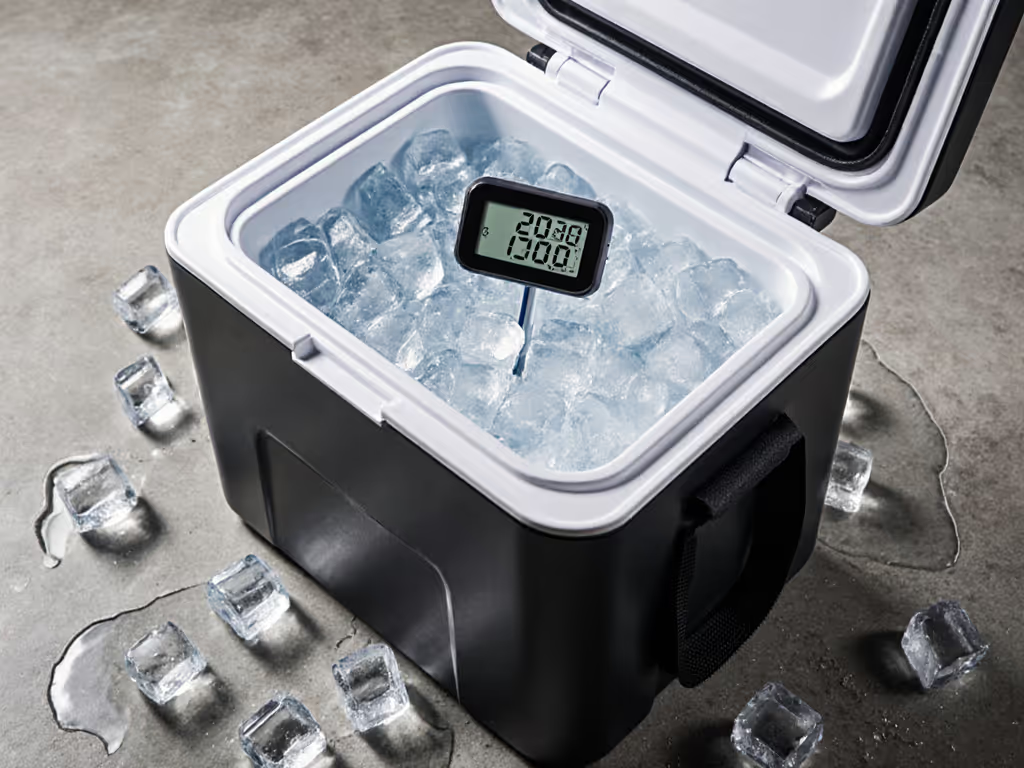
Track hold time via a $10 waterproof thermometer. If temps breach 40°F before schedule, audit ice ratio first (not the cooler).
Cold isn't a luxury; it is operational control. Spec for the worst day, not the best. When the sun hammers your worksite and opening frequency spikes, that 2:1 ratio is your only margin. Get it right, and you'll measure success in billable hours, not bailout runs for ice.
Related Articles