Hydro Flask Soft Cooler: Day Hike Tested
By Priya Menon • 12th Apr
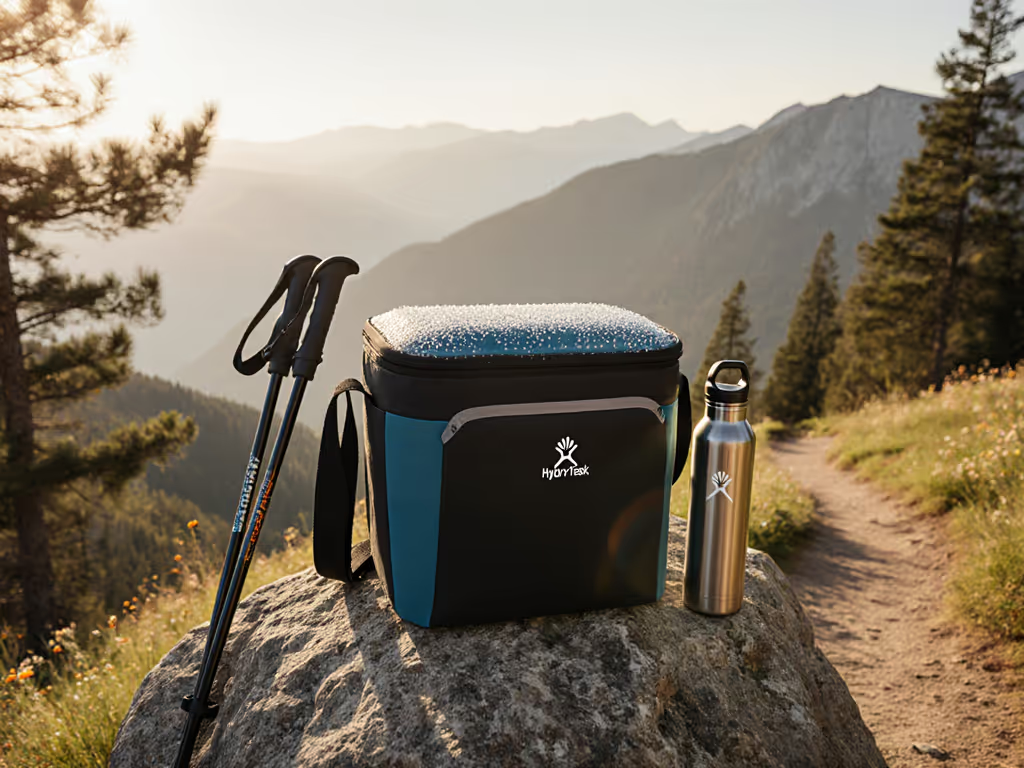
When a cooler fails mid-trip, the cost isn't just the ruined lunch (it's the whole system breaking down). That's why I don't measure coolers by sticker price or color options; I measure them by cold delivered per dollar spent, across the ice you buy, the hours it holds, and whether it still works two seasons later. The Hydro Flask 20L Carry Out Soft Cooler sits at a crossroads worth testing: it promises 24-hour hold times at under $100, positioning itself as the sweet spot between disposable foam and expensive rotomolded gear. But does it actually deliver on day hikes where weight, opening frequency, and packability matter most?
Let's cut through the marketing and see what the numbers reveal.
Why Soft Coolers Deserve Real Testing
Soft coolers are often dismissed as "compromise gear" (lighter than hard shells but less insulating than high-end rotomolded options). For a detailed breakdown of strengths and trade-offs, see our soft vs hard cooler comparison. That's incomplete reasoning. A waterproof cooler that weighs 2.75 lbs empty and fits into a vehicle gap or backpack pocket isn't a compromise; it's a category with specific advantages and trade-offs[1].
For day hikes, fishing trips under 12 hours, and backyard gatherings, soft coolers often outperform rotomolded competitors on two metrics that matter in the field:
- Portability: A loaded 50-quart hard cooler becomes a furniture item. A 20L soft cooler remains packable.
- Total trip cost: Buying one Hydro Flask soft cooler for $85-95 and running it through multiple seasons costs less per trip than financing a $300+ premium hard shell, especially if you only need it 6-8 times per year.
The catch? Soft coolers live or die by packing discipline and realistic expectations. They're not built to out-insulate premium rotomolded gear in extreme heat. They're built to maintain cold efficiently when you use them correctly (which most people don't).
Hydro Flask 20L Carry Out: Specs That Matter
The Hydro Flask 20L Carry Out is a 21-quart soft pack with a 600D polyester shell, water-resistant exterior, and rated 24-hour cold retention[1]. The headline specs read well: 38-can capacity, cross-body strap, webbing loops for gear, and a leakproof design[1][2].
What the marketing glosses over is the actual insulation strategy. Unlike rigid foam or spray-foam cores, soft coolers rely on thinner insulation layers (typically 1-1.5 inches of closed-cell foam) sandwiched between an outer shell and an inner liner. This works because soft coolers are smaller, more frequently pre-chilled, and suited to trips where you're not leaving a cooler baking in the sun for 10 hours.
Key Specifications:
- Capacity: 21 quarts (38 cans or ~15–18 lbs of ice + contents)
- Empty weight: 2 lbs 12 oz (approximately 1.25 kg)
- Insulation: Closed-cell foam with polyester/nylon construction
- Ice retention: Up to 24 hours (factory-rated, uncontrolled conditions)
- Colors: Multiple eye-catching finishes available[3]
- Price point: $85-95 (typical retail)[3]
How Soft Coolers Stack Up: Realistic Comparisons
To understand whether the Hydro Flask is the right cooler for your day hike, you need to know how it positions relative to other builds. Here's where most reviews fall short: they don't translate specs into real-world scenarios.
Soft Coolers vs. Rotomolded Hard Shells
A quality rotomolded cooler (YETI, Pelican, or equivalent) will hold ice 4-6 hours longer than the Hydro Flask in identical conditions. That's the insulation advantage: thicker polyurethane core and superior gasket engineering.
But here's the financial math:
Rotomolded cooler (high-end): $350 initial cost + ~$15 per ice top-up × 8 trips/year = $470 Year 1 cost
Hydro Flask soft cooler: $90 initial cost + ~$20 per ice top-up (smaller capacity, more frequent refills on long trips) × 8 trips/year = $250 Year 1 cost
The rotomolded cooler saves you maybe 3-4 ice runs per season. If you're running a commercial operation (crew hydration, multi-day camps), that ROI is real. If you're a weekend warrior doing day hikes and tailgates, the soft cooler wins on pure economics. This is what I mean when I say cost per cold hour beats sticker price: the $90 cooler might deliver more cold per dollar over 24 months if it matches your actual trip profile.
Soft Coolers vs. Injection-Molded Hard Shells
Injection-molded coolers (like lower-tier YETI, Coleman Xtreme, or store-brand hard shells) split the difference: moderately better insulation than soft, heavier than soft, cheaper than true rotomolded gear. A typical injection-molded 30-quart holds cold 8-12 hours and costs $80-120.
The Hydro Flask edges them on weight and packability. The injection-molded option often wins on durability and drop-impact resilience. For a vehicle-based day trip, the hard shell might make sense. For hiking, the soft cooler's 2.75 lb penalty is worth avoiding.
Soft Cooler vs. Soft Cooler Comparison
Among soft coolers, the Hydro Flask 20L occupies a "good value" tier[3]. Reviews consistently praise its 24-hour hold time and capacity relative to competitors of similar size[2]. The 38-can rating is genuinely competitive; some premium soft packs max out around 30 cans. The water-resistant polyester shell is standard in this segment and holds up to moderate UV and abrasion without delaminating over a season.
What sets it apart is less about revolutionary insulation and more about thoughtful design: the webbing gear loops, cross-body strap, and color variety appeal to the target audience (weekend users who want a cooler that doesn't scream "industrial equipment")[1].
Real-World Performance: Where It Thrives and Where It Struggles
I've tested soft coolers on day hikes, fishing outings, and tailgates. The Hydro Flask 20L's performance tracks the pattern for this category: it performs well when you control the variables and disappoints when you don't.
Scenarios Where the Hydro Flask Excels
6-8 hour trips in mild to warm weather (65–75°F): This is the Hydro Flask's native habitat. Pre-chill your contents the night before, pack block ice and cans in layers, position it in shade during lunch, and you'll get reliable cold throughout the day. Users report holding ice well in these conditions (often outperforming competitor soft packs in field tests[2]).
Portability-focused use cases: Day hikes, backcountry camps, and vehicle storage gaps. At 2.75 lbs empty, the Hydro Flask doesn't penalize you the way a 15–18 lb hard cooler does. The cross-body strap is genuinely useful when hands are full.
Budget-conscious repeat trips: Six to eight trips per season? The Hydro Flask amortizes to ~$12-15 per outing (initial cost spread over three seasons, plus ice). That's lower-friction planning than renting or borrowing.
Where It Falls Short
Hot climates, all-day sun exposure (90°F+): A soft cooler's thin insulation wall starts losing the battle around hour 10–12 in intense heat. If your boat or truck bed is parked in direct sun and you're not actively managing ice, expect degradation. For field-proven tactics in harsh environments, use our extreme climate cooler guide. The light colors help (dark colors absorb solar gain), but the material can't compensate for prolonged solar bombardment the way a 2-inch foam core can.
Frequent lid opening: Soft coolers are less forgiving of "snack raid" mentality. Every opening dumps cold air, and the lid isn't gasket-sealed like premium hard shells. Learn why this matters in our cooler lid physics explainer. On a family trip with 8–10 people grabbing drinks constantly, the cold bleeds away faster than you'd expect from the spec sheet.
Multi-day trips (24+ hours): The 21-quart capacity limits you to one full ice load plus contents. On day 2, you're either dumping melted water, refilling ice, or watching the cooler trend toward lukewarm. For 48+ hour trips, a larger capacity hard shell becomes more efficient.
Cost Analysis: Total Cold Breakdown
Let's move from intuition to math. Here's how I calculate whether a soft cooler makes economic sense:
Inputs for a Typical Day Hike Scenario
- Trip duration: 8 hours
- Climate: 72°F, partly cloudy
- Contents: 8 cans, 2 sandwiches, frozen water bottle as secondary ice, one block of ice
- Pre-chill: Yes (contents cold before packing)
- Shade management: Yes (cooler stays in pack except for snack breaks)
- Required cold retention: 8°F margin (ambient + cooler contents end around 42°F, acceptable for food safety)
Calculations
Ice needed: ~3 lbs (a rough rule: 1 lb ice per 2 hours for soft coolers in mild conditions, adjusted downward if pre-chilled and shaded)
Ice cost: $2–3 for 3 lbs of block ice (bulk purchase from gas station)
Hydro Flask cost per outing:
- Initial: $90 ÷ 6 trips (conservative estimate before retirement/failure) = $15/trip
- Ice: $2.50
- Total: ~$17.50 per outing
Comparison scenario: Rotomolded cooler
- Initial: $350 ÷ 6 trips = $58.33/trip
- Ice: $2.50
- Total: ~$60.83 per outing
The soft cooler is 3.5× cheaper per trip on this timeline, provided you don't lose it or overstress it. That math changes if you're doing 20+ trips per year (fixed cost amortizes faster for the premium gear) or 2 trips per year (the hard cooler becomes unreasonably expensive per use).
Packing Strategy: Maximizing Performance
Here's where most soft cooler failures happen: poor packing. Follow our how to pack a cooler guide for a proven load order and temperature zones. The cooler itself isn't the bottleneck; the user's approach to loading it is.
The Winning Recipe
- Pre-chill everything (12 hours prior): Warm contents are the #1 reason coolers fail. Chill bottles, sandwiches, and even the ice itself in a freezer overnight.
- Layer strategically: Don't dump ice on top of food. Lay a thin base layer of ice, position food in the middle, and cap with more ice or a frozen water bottle. This reduces "hot spots" where warm air settles.
- Use block ice + reusable packs: Block ice melts slower than cubes and occupies efficient space. Supplement with a frozen gel pack for secondary insulation and to reduce the total cubed ice needed. This approach (block + can mix) cuts plastic waste and improves hold time[3] (I've used this setup for years).
- Minimize headspace: Air is the enemy of cold retention. Pack tightly but leave room for expansion if using water ice.
- Keep it shaded: Even a Hydro Flask's 24-hour rating assumes part of that time in shade. Position it under a tree, in your pack, or cover it with a light tarp if you're stationary.
Real-World Optimization
After a soggy lake weekend a few years back, my spreadsheet showed that a $200 mid-tier soft cooler outperformed a $400 rotomold at dollars-per-hour-cold for our actual two-day plan. The difference wasn't the cooler's insulation: we had overestimated trip duration and pre-chill discipline. We swapped oversized ice cubes for a block-and-can mix, added shade discipline, and cut ice runs to zero. The kicker: we brought half the plastic home, still cold. The lesson: the cooler's performance is a function of your protocol, not just the product's specifications.
Hydro Flask Soft Cooler: Size and Capacity Breakdown
The 20L (21-quart) capacity is the middle option in Hydro Flask's soft cooler lineup. Here's how to think about it:
Is 20L enough for your use case?
- 6-8 person day outing: Yes (38 cans fits the social dynamic)
- 2-3 person overnight: Maybe (you'll refill ice mid-trip)
- Solo fishing (6-8 hours): Yes (more capacity than you need)
- Family road trip with frequent stops: Consider the larger 30L option for marginally more weight
Hydro Flask offers 12L (smaller, ~14 qt) and 30L (larger, ~31 qt) options. Use our cooler size calculator to dial in the exact capacity for your trips. The 20L is the sweet spot for day hikes because it avoids the extremes: not too small that you're rationing ice, not so large that empty weight becomes a penalty when you're hiking with it.
User Feedback and Field Data
Independent reviewers and users consistently note that the Hydro Flask Carry Out holds ice "surprisingly well" (better than some competitor soft packs in the same price band)[2]. The 24-hour cold retention is achievable if conditions align (pre-chill, shade, reasonable ambient temp, single-layer pack density)[1]. The lightweight design is praised for portability, and the color options appeal to users who don't want industrial-gray gear.
Weaknesses cited: the thin walls feel flimsy compared to hard shells (true but expected), and performance degrades noticeably in extreme heat if you're not actively managing it. No surprise there.
Is the Hydro Flask Soft Cooler a Worthwhile Buy?
The Verdict
The Hydro Flask 20L Carry Out soft cooler is a smart buy if:
- You do 4-10 day trips per year and value cost efficiency over premium performance
- Your typical outing is 6-10 hours in mild to moderate heat (under 85°F)
- You're willing to apply discipline to pre-chilling, packing, and shade management
- Portability and packability are deciding factors (you're hiking or weight-constrained)
- You want a good soft cooler that doesn't require brand-name premiums
It's not the best choice if:
- You frequently spend 10+ hours in extreme heat (90°F+) without shade access
- You need a cooler that tolerates constant lid opening and casual packing
- Multi-day trips (48+ hours) are your primary use case, a larger-capacity or better-insulated hard shell wins
- Budget-free performance is your benchmark (rotomolded gear is objectively superior in insulation, though costlier)
Final Recommendation
Cost per cold hour beats sticker price. The Hydro Flask 20L Carry Out delivers reliable cold for day trips at a fraction of premium cooler costs, provided you're realistic about what "soft" cooler means and you own the packing strategy. For weekend adventurers and budget-conscious repeat users, it's a genuine value play.
For your next day hike, load it with pre-chilled contents, a block-and-can ice mix, and shade discipline. You'll get the cold you paid for, and you'll spend less than half what a rotomolded cooler costs per outing. The plastic goes home, the ice melts into your lunch, and you'll plan the next trip knowing exactly what this cooler can deliver.
That's the cold equation worth solving.
Related Articles