Igloo Latitude Marine: How Long Ice Actually Lasts
By Ayo Okonkwo • 19th Mar
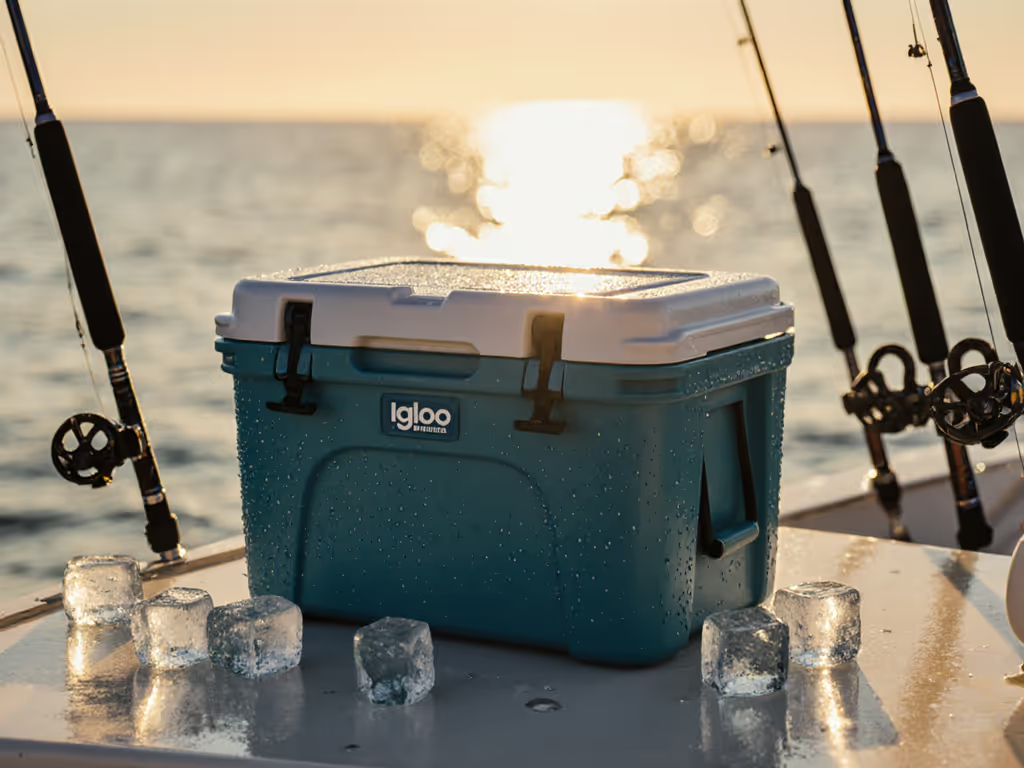
The Igloo Latitude Marine cooler line ships with promises of superior ice retention, rust-resistant hardware, and marine-grade durability. But what crews and anglers actually need is one hard number: How many hours will this cooler keep food and drinks safely cold on my worst-day scenario? That's where marketing stops and operational planning starts. This guide breaks down the marine cooler performance of Igloo's Latitude series across its size range (from 25 qt to 100 qt) through the lens of real conditions: full sun, frequent opening, warm ambient temperatures, and the chaos of a boat deck or construction site.
The difference between spec and site is what separates crews that serve cold drinks all day from crews that dump spoiled food at 2 PM. We'll test hold times against packing discipline, climate zone, and opening frequency, then show you the setup playbook that makes the difference between coolers that survive chaos and coolers that fail before lunch.
Why Ice Retention Specs Don't Tell the Whole Story
Igloo claims its Latitude Marine line delivers "up to 5 days of ice retention" in controlled lab conditions, a figure that sounds impressive until you unpack it: lab conditions mean a sealed cooler in stable climate, zero opening, and pre-chilled contents. Real jobs aren't labs. For a controlled baseline across 10 popular coolers, see our 24-hour ice retention test.
On a paving crew or fishing charter, a cooler that performs in the spec sheet often underperforms on the deck. Opening frequency, solar gain, lid-on-deck time, warm food loaded straight from the truck: these are the variables that evaporate hours of cold hold in the field. The Latitude Marine line addresses some of this with UV inhibitors and THERMECOOL foam insulation, but without rigorous packing discipline and site setup, even the 100 qt model won't meet your trip plan.
Cold that survives chaos is the only cold that counts.
That's the operational reality: spec for the worst day, not the best.
Insulation Quality: THERMECOOL vs. Rotomolded Competitors
The Latitude Marine coolers use THERMECOOL foam (a cleaner, eco-friendly insulation in both body and lid). This polyurethane-based foam sits mid-market: better than thin injection-molded coolers (which hold ice ~12-18 hours in summer), but not as dense as premium rotomolded competitors (which push 7-10+ days). The thickness of foam matters directly. More foam = slower heat transfer = longer hold time. Igloo's Latitude line allocates reasonable foam depth for a hard-sided cooler in the $30-$150 price band, making it credible for day-long trips and overnight use cases, provided you layer in the setup tactics discussed below.
Product Lineup and Capacity Trade-Offs
Igloo's Latitude Marine series spans five core sizes. Each solves different crew and trip scenarios, and choosing the wrong one is a hidden cost: oversized coolers are heavy and waste space; undersized ones require mid-trip ice runs or spoilage.
25 Quart: Lightweight Access Tool
Capacity: 25 qt / ~41 cans. Weight: ~7.6 lbs empty. Footprint: 18" × 12" × 17".
The 25 qt is the entry point, ideal for day trips under 6 hours, personal catch storage, or secondary hydration duty on a large crew. It fits most truck beds and boat rod holders easily. The trade-off: limited mass of insulation, so ice hold time drops to 12-16 hours in warm (80°F+) conditions with moderate opening. Best use: paired with a shade or cooler cover, and pre-chilled overnight. Not suitable as primary cooler for 8+ hour sites in extreme heat.
30 Quart: Personal-Scale Sweet Spot
Capacity: 30 qt / 41 cans. Weight: ~7.6 lbs. Exterior: 18" × 11.84" × 17.25".
Slightly larger capacity with similar build to the 25 qt, the 30 qt bridges single-person trips and small-group day use. Hold time extends to 16-20 hours in the same conditions, primarily due to increased interior mass (more liquid to absorb heat). Good for fishing trips, family picnics, or hydration backup on crews under 6 people. Still requires pre-chill and shade to perform optimally.
54 Quart: Mid-Size Workhorse
Capacity: 54 qt / 76 cans. Weight: 10.6 lbs empty. Dimensions: 26.37" × 15.5" × 15.5".
This is the production standard for crews and multi-hour fishing trips. The 54 qt balances portability and capacity, and the added insulation mass pushes hold time to 20-26 hours in typical summer conditions (85-90°F, 2-3 opening cycles per hour). Key features: four self-draining cup holders, triple-snap drain plug, and hybrid stainless-steel hinges. The cup holders prevent loose cans from floating in meltwater, reducing cold loss. The drain design allows you to remove excess water without dumping the entire cooler, a critical operational detail for boat decks and jobsites where meltwater pools.
70 Quart: Premium Day-Long Capacity
Capacity: 70 qt / ~102 cans. Weight: 13.4 lbs. Dimensions: 16.04" × 16.59" × 29.77".
The 70 qt extends hold time to 26-32 hours in the same conditions, thanks to increased foam thickness and volume. Suitable for crews of 6-12 or fishing charters lasting 8+ hours. The larger footprint means it requires dedicated truck bed space or boat storage, but the expanded ice mass justifies it for multi-day expeditions or high-volume hydration operations.
100 Quart: Extended Expedition Class
Capacity: 100 qt / 149 cans. Weight: 18.6 lbs. Dimensions: 34.37" × 16.91" × 18.79".
The flagship model, built for day-long adventures with large crews, charter fishing, or events. Hold time climbs to 32-40+ hours in standard summer conditions, and the cooler is Made in USA with robust stainless-steel screws that resist saltwater corrosion. The molded-in fish ruler on the lid is a handy touch for anglers. Trade-off: the 100 qt is heavy when fully loaded (~150 lbs), requires significant vehicle/boat space, and makes mid-trip relocation difficult. Reserve it for base-camp or stationary boat use.
Real-World Ice Hold Time: Variables That Matter Most
Lab specs assume optimal conditions. Field reality is messier. Here are the factors that shrink hold time, and how much each costs you.
Ambient Temperature and Solar Load
- Shade vs. direct sun: A cooler left in direct sun (85°F air, 120°F+ deck or truck bed surface) loses 40-50% of hold time compared to the same cooler in shade. Direct solar gain adds effective internal heat, the thermometer inside the cooler reads 10-15°F higher than ambient.
- Climate zone impact: In temperate zones (70-75°F), a 54 qt holds ice 24-30 hours. In extreme heat (95°F+), the same cooler holds ice 16-20 hours. That's a 30-40% penalty per 10°F rise in ambient temperature.
Packing Discipline
This is the single largest operational lever. Poor packing habits routinely destroy 6-12 hours of hold time: For proven layering and organization, follow our step-by-step cooler packing guide.
- Pre-chilling failure: Loading a warm cooler with cold ice and warm food forces the ice to chill the contents first, before it maintains cold. Pre-chill the cooler overnight (6-8 hours minimum), or fill with cold water and ice 2 hours before loading. This saves 4-6 hours of hold time immediately.
- Warm contents: Loading room-temperature sandwiches, beverages, or catch beside cold ice shortens hold time by 8-12 hours. Chill all contents to 35-40°F before packing. On fishing trips, ice the catch immediately after catch; don't pile it warm in a bait box.
- Air gaps and improper layering: Loose packing leaves air pockets that conduct heat. Layer in order: ice base → cooler contents → ice top, with no visible gaps. Use block ice (slower melting) for the base and bottom, crushed or cubed ice for perimeter gaps.
- Frequent lid opening: Each open-close cycle (especially in direct sun) can cost 15-30 minutes of hold time, depending on outdoor temperature and ambient humidity. On a jobsite with 10+ openings per hour, the cumulative loss is severe.
Meltwater and Drainage Strategy
Meltwater pooling inside the cooler reduces contact between remaining ice and contents, shortening effective hold time. The Latitude Marine's triple-snap drain plug and threaded drain option (on the 100 qt) allow you to remove meltwater without opening the lid, critical for maintaining cold.
Optimal workflow: drain meltwater every 2-4 hours on hot days, or whenever the internal water level exceeds 1-2 inches. On boats, tether the drain valve so it doesn't get lost overboard.
Ice Type and Density
- Block ice: Slower melt, ideal for base and long holds. Lasts 20-30% longer than crushed or cubed ice in the same cooler.
- Cubed ice: Faster melt but fills gaps and cools contents quicker. Use for top layers and perimeter.
- Reusable gel packs: Convenient but melt 40-50% faster than true ice; use as supplement only.
- Dry ice (if permitted): Superior hold time but hazardous; requires ventilation to avoid CO2 buildup in sealed coolers.
Rule: Use 1.5-2 lbs of ice per quart of cooler volume for day-long trips in summer heat. To choose the best block, cube, or slurry mix for your conditions, read our ice types and thermal properties explainer. A 54 qt requires 81-108 lbs of ice at trip start. This seems excessive until you account for the melt, air exposure, and opening frequency.
Marine-Grade Durability and Salt-Water Resilience
The Latitude Marine line is designed for salt-spray environments. If you’re comparing saltwater-ready options, our marine coolers head-to-head shows which models resist corrosion and rough-water abuse best. Key durability features:
Hardware and Fasteners
- Hybrid latches: Stainless steel in hinge areas, plastic in snap zones. This design prolongs latch life and ensures a secure closure without corrosion at the hinge.
- Stainless-steel screws: All fasteners are corrosion-resistant, critical for boats and coastal sites.
- Molded-in fish ruler: A practical, rust-free alternative to glued rulers.
UV Protection and Exterior Finish
- UV inhibitors: Prevent sun damage and color fade over years of use. Particularly important for white coolers in high-UV climates (South, Southwest, coastal regions).
- Stain and odor-resistant liner: Reduces bacterial growth and makes cleanup after fish or raw meat easier.
Drain Plugs and Meltwater Management
The Latitude Marine 54 qt features a recessed, triple-snap drain plug; the 100 qt upgrades to a threaded drain for hose attachment. Both eliminate the frustration of lost drain caps and allow zero-opening meltwater removal, a feature that extends hold time and reduces deck/truck mess.
Comparative Performance: Latitude Marine vs. Rotomolded Competitors
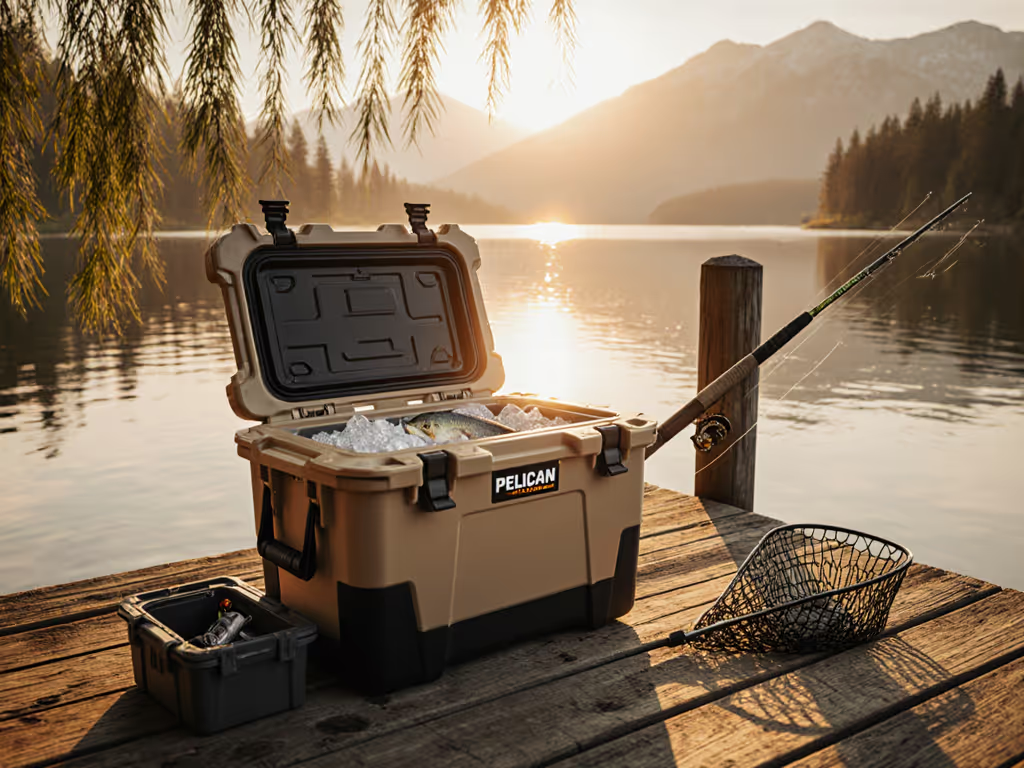
The Latitude Marine coolers occupy a value-to-performance sweet spot. They're not rotomolded (like Yeti, ORCA, or Pelican), which means they won't deliver 7-10+ day ice retention. But they're built heavier and thicker-walled than budget injection-molded models, and they cost $33-$150 vs. $300-$500 for premium rotomolded coolers.
Hold time comparison (50-90°F ambient, 2-3 hourly openings, pre-chilled, shade):
| Cooler Class | Typical Hold Time | Price Band | Best Use |
|---|---|---|---|
| Budget injection-molded (generic 50 qt) | 12-16 hours | $25-$50 | Day trips under 4 hours |
| Latitude Marine 54 qt | 20-26 hours | $75-$100 | Crew and fishing, 8-10 hours |
| Latitude Marine 100 qt | 32-40+ hours | $100-$150 | Full-day crews, charter fishing |
| Rotomolded premium (70 qt class) | 40-70 hours | $300-$500 | Multi-day expeditions, extreme heat |
For crews and anglers on a $50k-$150k household income budget, the Latitude Marine 54 qt and 100 qt deliver reliable 20-40 hour holds without the rotomolded premium. The 25 qt and 30 qt are backup and supplement tools, not primary coolers for production days.
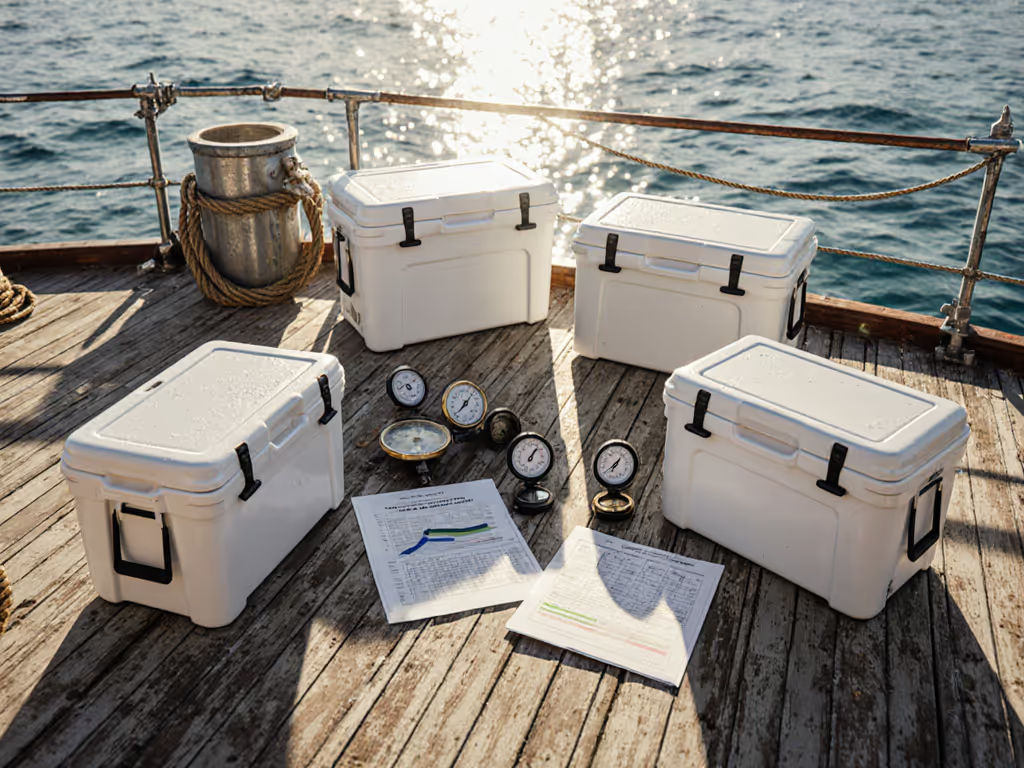
The Operational Playbook: Setup for Maximum Hold Time
Speccing the right cooler is step one. Executing the setup is step two, and it determines whether you hit hold-time targets or watch cold collapse mid-shift. Here's a repeatable workflow:
Pre-Trip Checklist (24 Hours Before)
- Pre-chill the cooler overnight: Fill with ice and cold water; leave overnight in a cool space or outdoor shade. Empty and re-fill 2 hours before loading.
- Pre-chill all contents: Beverages, food, and catch should be 35-40°F before packing. Warm contents steal 8-12 hours of hold time immediately.
- Inspect hardware: Check latches, hinges, and drain plug for cracks or corrosion. On salt-water coolers, a small hinge failure can cascade into a failed seal.
- Stage shade: Identify a shaded location on deck, in the truck, or on the jobsite. Mark it. Direct sun costs 40-50% of hold time.
Packing Recipe
- Layer 1 (Base): 1.5-2 inches of block ice, laid flat.
- Layer 2 (Contents): Pack food and beverages, keeping raw meats and fish separate from drinks and ready-to-eat items (food-safety boundary).
- Layer 3 (Top ice): 1-2 inches of cubed or block ice, with no air gaps around perimeter.
- Layer 4 (Seal): Close the lid and place in shade immediately.
Meltwater and Maintenance (Every 2-4 Hours on Hot Days)
- Drain: Use the snap or threaded plug to remove meltwater; don't open the lid.
- Inspect seal: Ensure the lid gasket (if present) hasn't shifted; check hybrid latch tension.
- Keep in shade: If the cooler has drifted into sun, relocate immediately.
- Log ice level: Estimate remaining ice mass; plan a refill window if needed (typically, resupply at 50% melt).
On-Site Assignment
Don't leave cooler maintenance to chance. Assign a "cooler chief" - one crew member responsible for shade, drainage, and refill scheduling. This role rotates daily. Clear accountability prevents drift: coolers left in sun, lids left open for ice raids, and meltwater buildup.
Food Safety and Regulatory Compliance
Food safety standards require contents to stay below 40°F (4°C) to prevent bacterial growth. For protocols, temperature checks, and safe packing zones, see our cooler food safety guide. For catch (fish, game), temperature and time directly impact flesh quality and regulatory compliance (some regions require ice contact within 2-4 hours of catch).
The Latitude Marine's stain and odor-resistant liner helps reduce bacterial cross-contamination, but layered packing is the main defense:
- Separate raw (fish, meats) from ready-to-eat using a perforated divider basket. Raw items should sit on dedicated ice, not in meltwater pooling with other food.
- Monitor thermometer: Use an inexpensive dial or digital cooler thermometer ($5-$15). If internal temp rises above 45°F, accelerate meltwater drain and resupply ice.
- Don't rely on "feels cold": A cooler can feel cold externally while internal temps drift above 40°F, especially near the lid or in air pockets.
Limitations and Trade-Offs
Weight and Portability
The Latitude Marine 54 qt weighs 10.6 lbs empty; fully loaded (~150-160 lbs total), it requires two-person handling in tight spaces (boat cabin, narrow truck bed). The 100 qt is even heavier (~200+ lbs loaded) and not portable mid-trip. If your site requires frequent relocation (moving between jobsite zones, truck to shore, etc.), downsize to the 54 qt or pair it with a small 25 qt for secondary hydration.
Size and Vehicle Fit
The Latitude Marine 100 qt measures 34.37" × 16.91" × 18.79" - large enough to conflict with toolboxes, generator placement, or boat cabin storage. Measure your deployment space before ordering; a cooler that doesn't fit is worthless.
Not Rotomolded
If you're running 24+ hour expeditions in extreme climates (desert, arctic), rotomolded coolers deliver measurably better performance. Latitude Marine is designed for day-long and overnight use, not multi-day wilderness camps where premium hold time justifies the cost premium.
Meltwater Drainage Requires Active Management
The drain plug is convenient but requires discipline, leaving meltwater pooling inside defeats the ice retention advantage. Crews that neglect drainage routinely see hold times collapse by 6-12 hours.
Summary and Final Verdict
The Igloo Latitude Marine review boils down to a practical calculus: What hold time do you need, and will this cooler deliver it with your setup discipline?
For crews and anglers committed to pre-chill, shade, layered packing, and meltwater management, the Latitude Marine lineup delivers real value:
- 25 qt and 30 qt: Backup hydration and catch storage, 12-16 hour holds. Start here only if trips are under 4 hours or paired with larger primary cooler.
- 54 qt: The production standard. 20-26 hour hold time, reliable for crews of 5-10 and fishing trips up to 10 hours. Best value per quart of capacity.
- 70 qt and 100 qt: Extended capacity for full-day and large-crew scenarios. 26-40+ hour holds with proper setup. Choose based on headcount, trip duration, and vehicle/boat space.
The Latitude Marine coolers are not luxury rotomolded units, and they won't compete on ultra-premium hold time. But spec for the worst day, not the best, and they'll survive production shifts, salt water, UV exposure, and crew handling better than thin injection-molded coolers.
The margin between a working cooler fleet and one that collapses mid-job isn't the cooler alone, it's the setup. Pre-chill. Shade. Drain. Assign accountability. A mid-market Latitude Marine backed by discipline will outperform a premium cooler left in the sun with a warm load. Cold that survives chaos is the only cold that counts.
Related Articles