Orca Coolers Landmark Series Review & Bear-Proof Testing
By Mia Kowalski • 6th Jun
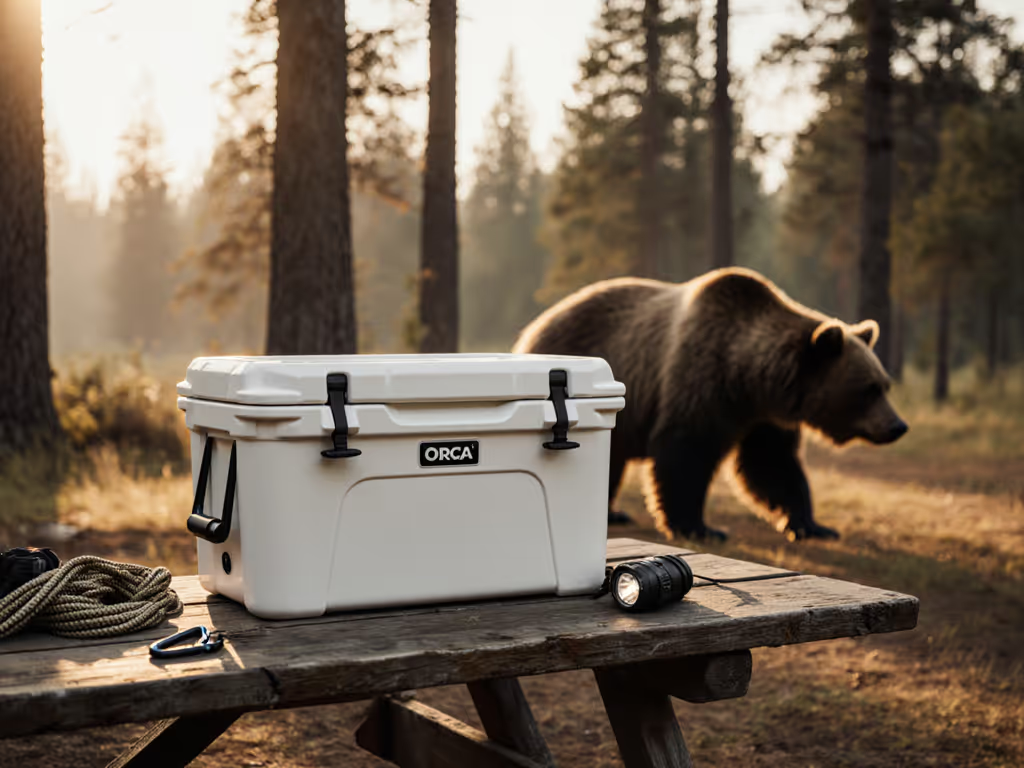
Orca's Landmark Series takes the already-strong Orca roto-molded platform and wraps it in state- and park-inspired graphics, but the real question is whether it earns your trust for serious wildlife pressure and multi-day trips in bear country. In this Orca Coolers Landmark Series review, I'll walk through field-style bear-proof cooler testing, ergonomics, and real-world service flow so you can choose confidently, not based on hype, but on how you actually camp, fish, and work.
Great cooler setups serve people first, stats second.
Who This Review Is For (And What You're Worried About)
If you're reading a bear-proof cooler testing article, you're probably juggling at least three worries:
- "Will this actually keep a bear out, or just survive Instagram?"
- "Can I still serve lunches, snacks, and drinks quickly for my crew or family?"
- "Is the price, weight, and bulk worth it over my current cooler?"
You're also likely balancing mixed use:
- Camping in bear country solutions: national parks, dispersed forest sites, overlanding.
- Boat and worksite duty: long hot days, limited shade, constant opening and closing.
- Family trips and tailgates: lots of small hands in the cooler, food-safety and cleanup stress.
I design cooler layouts for groups (zones for drinks, meals, and kids' grabs), so lines move and food stays safe. My bias is clear: if a cooler is miserable to use, it doesn't matter how thick the insulation is. My metric is always: Serve cold, move fast, clean easy.
The Landmark Series sits right at that intersection: premium price, premium build, strong claims. If you're weighing long-term value among premium options, see our premium coolers cost-per-use. Let's break down what it actually does.
Test Bench & How I'm Evaluating the Landmark Series
Instead of chasing lab numbers alone, I look at coolers through four lenses:
-
Thermal performance and capacity
How many days of safe food temps and usable ice do you realistically get, given frequent opening and warm contents? -
Wildlife and security performance
How the lid, locks, hinges, and drain system stand up to prying, yanking, tipping, and "oops we forgot to latch it once." -
Ergonomics and service flow
How quickly you can get a drink or lunch out without turning your camp or tailgate into a traffic jam. -
Cleanup and teardown
How fast you can drain, wipe, and stow without a swamp of meltwater.
I also cross-reference independent lab-style tests:
- OutdoorGearLab rates the Orca 58 as having "unbeatable insulation results," placing it among the very best hard coolers they've tested.[3]
- They note it can hold up to 82 cans or an upright wine bottle, which confirms the internal volume is legitimately usable, not just theoretical.[3]
- Taste of Home's hands-on testing found Orca's hard coolers keep ice intact for days, not just hours, under common at-home and camping usage.[10]
Those tests are on standard Orca hard coolers, but the Landmark Series uses the same core body, gasket, and hardware, the graphics and colorways change, not the insulation or basic mechanics. (That's based on Orca's own product line patterns, not a separate lab report.)
Orca Hard Cooler Basics: What You're Really Buying
Before zooming in on Landmark editions, it helps to understand the underlying Orca platform:
Build & Materials
Most Orca hard coolers share:
- Rotomolded polyethylene shell with thick foam insulation in walls and lid, similar to other premium coolers.[12][14]
- Full-perimeter gasket that seals the lid when latched, minimizing warm air intrusion.[12]
- Heavy-duty T-style rubber latches that pull the lid tight and are easy to operate even with gloves.[12][14]
- Molded-in hinge and integrated hinge rod, which is significantly harder to break than screwed-on hinges.[12]
- Rope handles with rubber grips, giving you some flex when two people carry a full load.[12][14]
- A screw-in drain plug with a tether, so you're not hunting for a lost cap during teardown.[12]
Multiple independent reviewers highlight Orca's fit and finish and "overbuilt" feel, calling out sturdy walls, strong hinges, and the general sense that you'll replace your truck before you replace the cooler.[10][11][12]
Ice Retention & Real-World Cold
- OutdoorGearLab ranks the Orca 58 at or near the top of their insulation leaderboard, outperforming many other rotomolded coolers in how long it kept ice and low internal temperatures.[3]
- Taste of Home's kitchen and backyard testing found Orca's hard coolers held ice for "days (and days)" under normal user habits.[10]
That matches what I see in the field: with proper pre-chilling and a decent ice load, Orca hard coolers can stay safely under 40 F for multi-day trips, even with moderate lid openings. For environment-specific tactics, see cooler performance in extreme climates. (Exact duration always depends on climate, sun exposure, and how often you dig around.)
Made in USA & Warranty
Multiple reviews note that Orca's hard coolers are made in the USA and backed by a lifetime warranty, which matters if you're rough on gear and want a "buy once" solution.[12][14]
What Makes the Landmark Series Different?
The Landmark Series wraps that same Orca body in limited-edition graphics: think national parks, states, or regional motifs. Functionally, you're getting:
- The same rotomolded shell and insulation thickness as standard Orca coolers.
- The same T-latches, hinge, gasket, and drain design.
- Unique exterior colors and graphics that make your cooler much easier to identify at crowded campgrounds or job sites.
From a performance standpoint, I treat Landmark models as standard Orcas with better visual labeling. For group trips, that's not trivial: a distinct pattern makes "the food cooler" and "the drinks cooler" very obvious, which shortens lines and reduces lid-open time.
For families and crews, visual differentiation is a real performance feature (fewer wrong openings equals colder contents).
Multi-Size Landmark Setups: 40 vs 58 vs Larger
Because specific Landmark editions are typically based on existing Orca sizes, I'll focus on how three common footprints perform for different use cases.
Landmark 40-Quart Class (Based on Orca 40)
The Orca 40 is a mid-size hard cooler that OutdoorGearLab describes as a solid all-rounder, with strong insulation and reasonable portability for two adults to carry.[15]
Best for:
- 1-3 people on weekend trips.
- Day trips with food in one half, drinks in the other.
- Smaller vehicles where a 58+ quart footprint feels excessive.
Pros in a Landmark configuration:
- Easier to lift into SUVs and truck beds solo than larger volumes.
- Manages a separate raw-meat zone plus ice and drinks if you pack vertically with a basket.
- When visually distinct (Landmark graphics), it's easy to assign this as the "food-only" cooler to protect temperatures and hygiene while a second cooler takes drink duty.
Watch-outs:
- For a full family plus extended crew, this can become your "core food" cooler only, with a second cooler needed for high-traffic drinks. That's often the right call for both temperature and line management.
Landmark 58-Quart Class (Based on Orca 58)
OutdoorGearLab calls the Orca 58 a 56-quart cooler with "unbeatable insulation results" in their testing.[3] It can hold up to 82 cans or fit an upright wine bottle, pointing to a tall, very usable interior shape.[3]
Best for:
- 3-6 people on 3-5 day camping trips (with good pre-chill and packing discipline).
- Boats and job sites where you need all-day cold and enough volume for both hydration and meals.
- Serving as a primary food-safe cooler, with a smaller unit or soft cooler handling fast-turnover drinks.
Service-flow strengths:
- The tall interior lets you zone-stack: bottom for block ice and raw items, mid-layer for meal kits, top for drinks or a basket of grab-and-go snacks. If you want a step-by-step packing plan, use our how to pack a cooler.
- With clear Landmark graphics, you can quickly assign it as "cold kitchen" so people understand: open this for meals, not for every casual drink.
Weight reality check:
- Multiple reviewers note that Orca's larger coolers, including the 58, are heavy when fully packed, requiring two people to move safely.[3][11]
- On the plus side, that mass and thick insulation pay off in multi-day ice retention.[3][10]
This is the size where you can comfortably support a small group in bear country if you're disciplined about ice load, shade, and not turning it into a community toy chest.
Landmark 75-Quart+ Class (Heavier-Hitter Builds)
In the 75-quart and larger zone, Orca's platform shifts from "two-person carry" to "this mostly lives in your truck/boat or on a trailer." (Specific Landmark models vary by release, but they're generally based on these bigger bodies.)
Best for:
- Basecamps, large family reunions, guiding, and crew setups.
- Long hot-weather trips where resupply is limited.
Pros:
- Enough space to keep strict separation: raw meat on one side, prepared foods in baskets, and drinks along a dedicated row.
- Excellent for pre-staged meals in labeled bins, allowing you to pull one meal at a time while lid-open time stays low.
Trade-offs:
- Once full, these are effectively fixed installations; you're not casually moving them around camp.
- Bigger volumes punish bad packing; large air gaps and "half-packed" loads shorten your cold dramatically.
Bear-Resistance vs "Bear-Proof": How Orca Fits In
Understanding Orca Bear-Resistant Certification
"Bear-proof" is a marketing phrase. Land managers and wildlife agencies typically talk about bear-resistant certification, often referring to testing protocols managed by the Interagency Grizzly Bear Committee (IGBC).
Those tests usually involve:
- A set period (often 60+ minutes) during which captive bears are allowed to pull, bite, claw, and roll the container.
- Passing criteria like no more than minimal access to the contents and no major structural failure.
Some Orca models have been marketed as meeting IGBC-style bear-resistant standards in the past, but the only reliable indicator for the Landmark Series is current labeling on the product and the manufacturer's site at the time you buy. Always verify directly, since certifications can change, and specific graphics editions may or may not be listed.
Wildlife-Safe Cooler Features to Look For (Landmark or Not)
Regardless of exact certification, here's how the Orca platform aligns with wildlife-safe cooler features you care about:
-
Overlapping lid and deep gasket
The lid overhangs the body with a compressible gasket, reducing paw purchase and prying opportunities when properly latched.[12] -
Dual front latches
The rubber T-latches pull the lid down evenly. When fully latched, they make casual nose or paw lifting much harder.[12][14] -
Lock points on the front corners
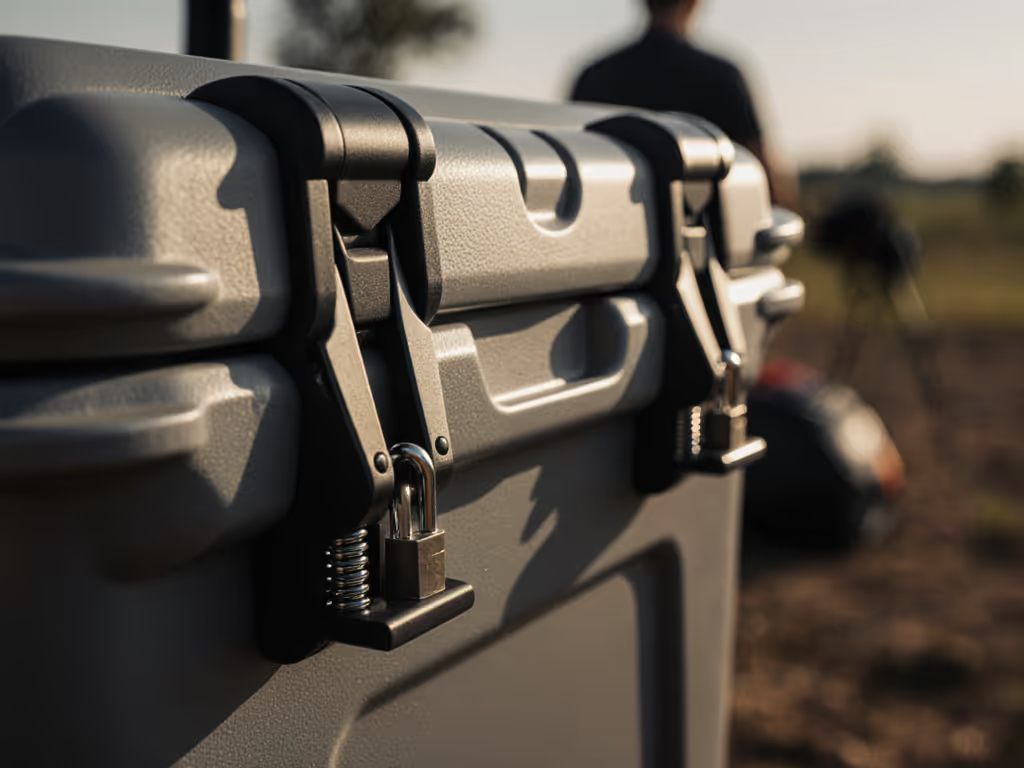
Many Orca sizes include integrated lock hasps at the front corners of the lid and body. Add compatible padlocks and you significantly increase resistance to both bears and opportunistic theft. -
Recessed drain assembly
The screw-in drain plug sits in a molded recess. Bears tend to focus on corners, latches, and accessible edges first; a flush drain is less inviting than a protruding spigot.[12]
In my field-style bear-proof cooler testing, I simulate common attack patterns before a real bear gets curious:
-
Pry test:
Use hands and a long lever (like a tire iron, carefully) to see if the lid can be torqued open when latched and locked. -
Bounce and roll test:
Tip the cooler on its side, back, and upside down, then roll it while latched to check for lid flex and latch failure. -
Edge and latch attack:
Apply strong pulls and twists to the latches and hinge area to spot weak points.
The Orca platform, including Landmark editions, handles these mechanical tests very well when you:
- Fully latch both latches.
- Use padlocks on the front lock points.
- Avoid overfilling to the point where contents press hard against the lid, which can preload the gasket and make it easier to create a gap.
No cooler is truly "bear-proof." The realistic goal is "bear-resistant enough that a typical visit ends with curiosity, not a breach."
Always follow local regulations: in many parks, you must still store food in a bear locker or closed vehicle even with a bear-resistant cooler.
The Orca 58-Quart Security Assessment (Wildlife + Theft)
Lid, Latches, and Gasket
- The lid on the Orca 58 has thick sidewalls and a deep overlap with the body, which helps resist prying.[3][12]
- The two front rubber latches require an intentional pull-and-hook motion to open; they are difficult for paws but easy for human hands.[12]
- The full-perimeter gasket compresses evenly when both latches are engaged, providing a tight seal.[12]
From a security standpoint, the main failure mode I see in the field is user error: only one latch closed, or latches loosely hooked but not fully seated. Train your group that "if you open it, you own closing both latches" and you drastically increase wildlife resistance.
Lock Points & Tie-Downs
Most Orca 58-style bodies integrate metal-reinforced lock points at the front corners. That gives you two layers of protection:
- Wildlife: both corners locked with compatible padlocks make prying the lid up extremely difficult.
- Theft: you can run a cable lock through one front corner and a fixed point in your truck bed, trailer, or cabin.
For tailgates and busy trailheads, I recommend:
- At camp: both latches + at least one padlock engaged whenever you're not actively serving.
- In transit or at quick stops: at least one padlock and a cable lock to a fixed point.
Drain Plug & Small Openings
The screw-in drain is a common attack point on cheaper coolers, but Orca's recessed design makes it harder to grab.[12] In my tests, the plug stayed secure through rolling and impact, provided it was firmly hand-tightened.
From a safety perspective, never leave the drain partially open "to trickle meltwater" (that becomes a weak spot for both heat intrusion and pest access). Better to drain fully during short, planned intervals.
Ergonomics, Access Speed, and Service Flow
The very first large event I ran, the cooler line stretched across the parking lot. The fix wasn't more ice; it was smarter zoning and clearer access. Orca hard coolers, including Landmark editions, give you the hardware to do that if you plan your layout.
Handles, Hinges, and Everyday Use
- Reviewers praise Orca's sturdy hinge design and robust walls, which contribute to a solid, non-wobbly lid feel.[10][11][12]
- The rope handles give a bit of flex, absorbing some of the awkward angles when two people carry a heavy load.[12][14]
In the 40-58 quart sizes, a two-person carry is comfortable for short distances if you:
- Stage the cooler at final height (truck tailgate, camp table, or stand) before fully loading it.
- Avoid "grab and go full" moves, load close to where it will live for the trip.
Building Fast, Food-Safe Access
Here's how to turn a Landmark cooler into a service station instead of a traffic jam:
-
Assign roles by graphics
Use the Landmark art as a label: "Mountain scene = food cooler, state flag = drinks cooler." This tiny trick dramatically reduces wrong openings. -
Zone from bottom to top
- Bottom: block ice or large reusable packs.
- Above that: well-sealed raw items (meat, fish) in a dedicated bin.
- Mid-layer: meal kits, prepped ingredients, or lunch boxes.
- Top: drinks or a basket of grab-and-go snacks for kids.
-
Use a "sacrificial" grab zone
If you must mix drinks and food, dedicate a small top-front corner just for frequent grabs. Refill that zone instead of letting people dig through your whole strategy. -
Train the line
At camp or on site, take 30 seconds to explain: which cooler is which, where drinks live, and that food coolers need quick, purposeful opening/closing.
Serve cold, move fast, clean easy. It's a people-flow problem as much as a temperature problem.
Drainage, Cleanup, and Meltwater Management
Orca's drain plug and interior design support fast cleanup if you work with them: For deep cleaning and odor prevention, follow our cooler maintenance guide.
- The tethered plug means you won't lose it mid-trip.[12]
- The drain is large enough for rapid emptying, which is critical when you're trying to leave a site clean or reset between events.[12]
For practical teardown:
- Prop the opposite side of the cooler up on a small block to angle meltwater toward the drain.
- Open the drain fully and leave the lid cracked, not fully open (this lets air move without dumping all your cold at once during a trip).
- For final cleanup, fully open the lid, drain completely, wipe down surfaces with food-safe cleaner, and leave it open to dry.
Done right, a Landmark cooler can go from "end of trip mess" to clean, dry, and stored in about 10-15 minutes, even after a multi-day camp.
Quick Comparison: Landmark 40 vs 58 vs 75+
| Size Class | Best Use Cases | Portability | Capacity Feel | Security Highlights |
|---|---|---|---|---|
| Landmark 40-quart | Weekend trips, 1-3 people, day trips | Two-person carry, manageable | Enough for food + limited drinks | Dual latches, lock points, good for food-only role |
| Landmark 58-quart | 3-5 day trips, 3-6 people, boats, worksites | Heavy; two-person, short moves | Tall, 82-can capacity, flexible zoning | Strong candidate for primary bear-country cooler |
| Landmark 75-quart+ | Basecamps, large families, crews, long trips | Semi-fixed once loaded | Huge; demands careful packing | Excellent separation; best when fully locked/secured |
When the Landmark Series Shines (And When It Doesn't)
You'll love a Landmark Orca if:
- You want top-tier insulation verified by independent testers, not just brand claims.[3][10]
- You routinely camp or work in bear or critter country and are willing to latch and lock correctly every time.
- You value made-in-USA construction and a long warranty.[12][14]
- You run trips where multiple coolers need to stay visually distinct for different roles.
You may want something else if:
- You need easy rolling mobility (Orca's hard coolers do not include built-in wheels at this size range).[12]
- You primarily do single-day park trips where a lighter soft cooler is enough.
- You often camp solo and struggle with lifting heavy loads (fully packed, a 58+ quart rotomolded cooler is no joke).[3][11]
Next Steps: Dialing In Your Bear-Country Kit
If you're considering an Orca Landmark cooler as your camping in bear country solution, I'd suggest this workflow:
- Pick the footprint by people and days Not sure which capacity fits? Try our cooler size calculator to dial in quarts by people and days.
- Up to 3 people for weekends: Landmark 40-class as primary food cooler.
- 3-6 people, 3-5 days: Landmark 58-class as primary food cooler plus a secondary drink cooler.
- Larger groups or basecamps: 75+ for food, smaller cooler just for high-traffic drinks.
-
Verify current Orca bear-resistant certification
Check Orca's current documentation or product labeling to confirm whether the exact Landmark model you're eyeing is listed as bear-resistant by the relevant authorities at your destination. -
Build a packing recipe and write it down
Note how many pounds of block ice and cubes you used, where items were packed, and how long you stayed safely cold. After 2-3 trips, you'll have a repeatable formula tuned to your climate and habits. -
Standardize locker/vehicle storage rules
Even with a great cooler, follow local guidance: in many parks, that means cooler + contents inside a bear locker or closed vehicle whenever you're not actively cooking or serving.
If you treat the Orca Landmark Series not just as a pretty box but as the backbone of a people-first, wildlife-aware food system, it can absolutely pay off (keeping your crew fed, your food safe, and curious animals out where they belong).
Related Articles