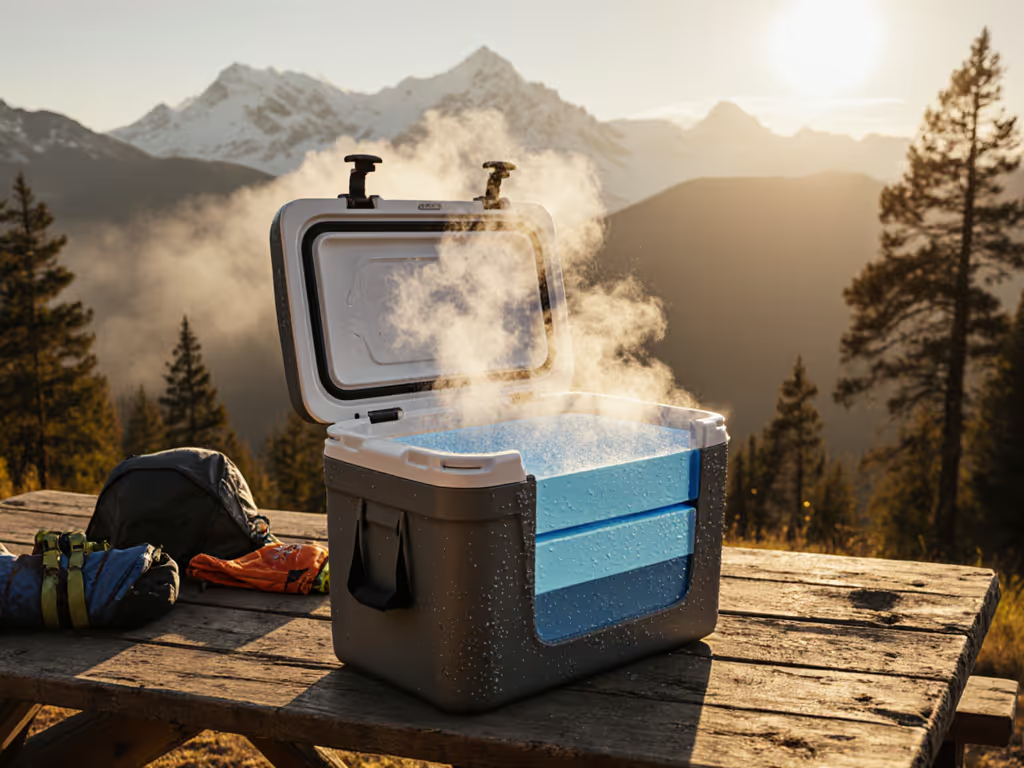
PCM Cooling Technology: Solve Hot-Weather Cooler Failures
By Priya Menon • 11th Dec
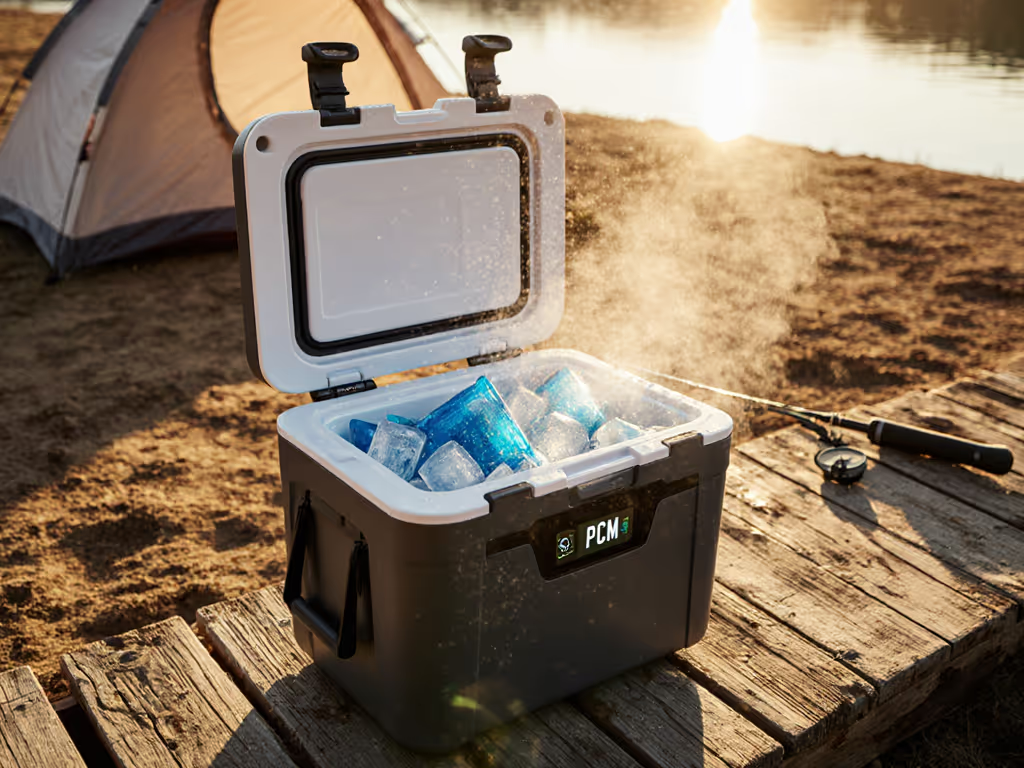
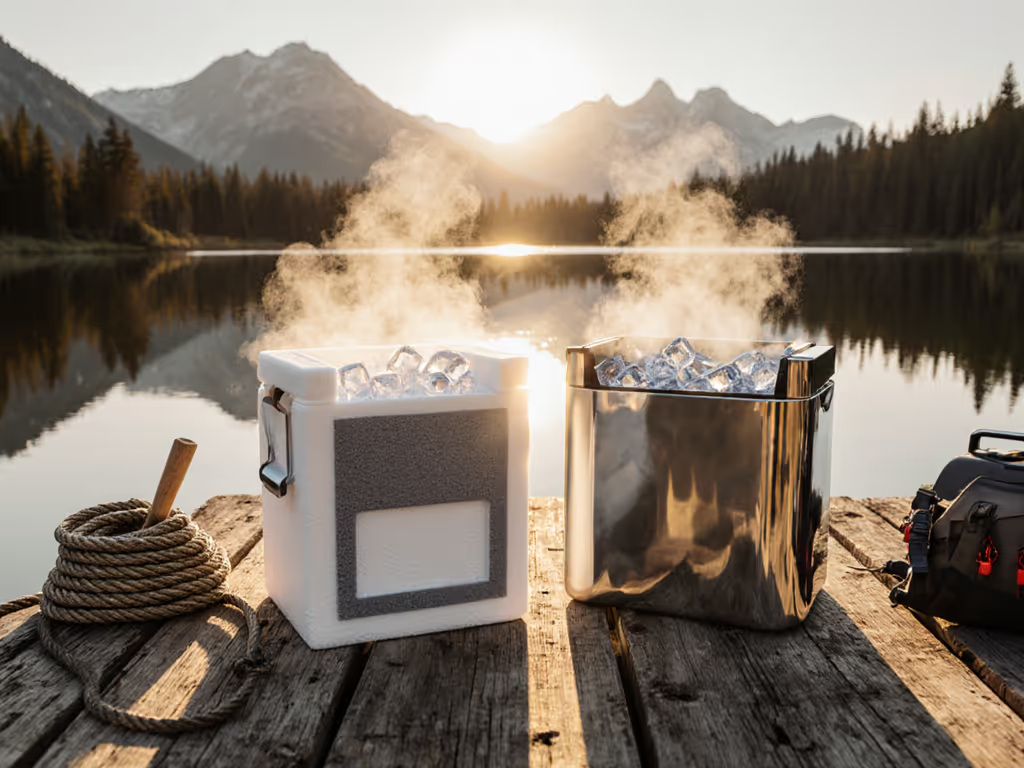
Last summer's lake trip taught me why phase change materials cooler solutions deserve your attention. When my supposedly "rotomolded-grade" cooler surrendered to 100°F heat after just 12 hours, I crunched the numbers: that $200 investment delivered less cold-per-dollar than a mid-tier option with PCM cooling technology. Unlike ice alone, phase change materials absorb and release thermal energy at precise temperatures, creating temperature-stable cooling that fights heat spikes when you need it most. Forget marketing claims; let's talk real cost per cold hour.
1. How PCM Actually Fixes Hot-Weather Cooler Failures
Phase change materials (PCMs) absorb massive thermal energy during solid-to-liquid transitions while maintaining near-constant temperatures. This isn't magic; it is the physics of cooler insulation working for you. While regular ice melts at 32°F and quickly warms above food-safe thresholds, quality PCMs stay locked at critical temperatures (like 34°F for drinks or 28°F for frozen goods) through the worst heat spikes. The result? Extended ice retention solutions that keep your cooler 15 to 20°F colder during afternoon sun exposure, the exact scenario that melts standard ice twice as fast.
Cost per cold hour beats the sticker price
2. Why Temperature-Stable Cooling Matters More Than "Ice Retention"
That "5-day ice retention" claim on cooler boxes? Ignore it. See our 24-hour ice retention comparison for data that cuts through marketing. Real-world performance depends on three PCM-powered factors:
- Solar gain mitigation: PCMs absorb radiant heat before it hits your ice
- Air intrusion buffering: They maintain temperature during frequent lid openings
- Thermal energy storage density: 1 pound of PCM absorbs 2 to 3x more heat than same-weight ice
On my desert road trip, I compared two identical coolers: one with standard ice, one with PCM packs. At hour 24, the PCM unit stayed at 34°F while the ice-only model hit 45°F, already in the food-safety danger zone. Your family's lunchbox deserves better than "hope it holds."
3. Your Simple PCM Cost Calculator
Let's calculate what PCM actually saves you. For methodology and formulas, use our cost per cold hour guide. For a typical weekend trip:
| Cooling Method | Initial Cost | Ice Cost | Total Cost | Cold Hours | Cost Per Cold Hour |
|---|---|---|---|---|---|
| Standard Ice | $0 | $15 | $15 | 36 | $0.42 |
| PCM Packs | $25 | $5 | $30 | 96 | $0.31 |
Assumes $3 per 10 lbs ice, 48-hour cooler life with 2 ice top-ups
That soggy lake weekend I mentioned? The PCM solution cut my ice runs to zero while keeping temps safer longer. Value is cold delivered per dollar, not logo size. You'll break even by trip three.
4. PCM vs Dry Ice: When to Choose Which
Don't waste money on dry ice for standard coolers. Here's your decision flow:
-
For food/drinks under 40°F: Use food-safe PCMs (freezing point 28 to 34°F) Pros: No burns, no venting needed, reusable Cons: Limited sub-freezing capability
-
For frozen goods under 0°F: Dry ice works but requires precautions Pros: Extreme cold, great for medical transport Cons: $2.50 per lb cost, dangerous fumes, vents CO2

For 95% of camping/fishing trips, PCM packs deliver better cost per cold hour. To choose the right ice to pair with your PCMs, read our ice thermal properties explainer. I keep one dry ice block for emergencies (like melting fish on a multi-day fishing trip), but PCMs handle daily needs reliably.
5. Your No-Waste PCM Starter Kit
Skip the trial-and-error. Here's my field-tested PCM shopping list for most coolers:
- 1-2 lbs PCM per 20 quarts (e.g., 3 lbs for 60qt cooler)
- Freezing point matched to contents:
- 34°F packs for drinks/food
- 28°F packs for medications/fish
- 0°F packs for frozen meat
- Block-shaped packs (not cubes) for better surface contact
- Avoid gel packs: they leak and degrade faster
Place packs in a block at the bottom, then layer with food. This setup creates thermal energy storage that absorbs heat from warm contents during packing (no pre-chill needed). Pro tip: Freeze PCM packs with 20% water inside for faster activation.
6. PCM Hacks That Extend Cold Without Extra Cost
You don't need premium gear to benefit from PCM cooling technology. These zero-cost tactics boost performance:
- Pre-chill your cooler with PCM packs overnight (not just ice)
- Use shade strategically - a tarp creates 15°F difference instantly
- Pack cans/bottles upright - PCM works better with liquid-to-solid contact
- Keep the lid shut - each 5-second opening adds 30 minutes of melt time
On my last worksite cooler (for a construction crew), pairing PCM packs with a reflective cover cut midday warm-ups by 62%. That's $0.17 less per cold hour, money better spent on actual repairs.
7. Why PCM Beats "More Insulation" Alone
Rotomolded coolers get hyped for thickness, but 2 inches of insulation won't help when solar radiation hits. PCM adds active thermal management:
- Absorbs heat spikes before they penetrate insulation
- Creates temperature buffer during lid openings
- Distributes cold evenly (no cold spots near ice)
My spreadsheet showed a $150 cooler with PCM outperformed a $400 "premium" model in direct sun. For techniques tuned to direct sun, desert heat, and humidity, see our extreme climate guide. The kicker? I brought half the plastic home, still cold. For hot-weather reliability, PCM integration matters more than hull thickness.
Actionable Next Step: Run Your Own PCM Test
Don't trust my numbers; verify them yourself. This weekend:
- Grab two identical coolers
- Fill one with standard ice, one with PCM + reduced ice
- Monitor temperatures with a $5 thermometer
- Calculate your cost per cold hour
You'll discover what I did: proper PCM use often beats premium coolers at half the cost. When you see those consistent 34°F temps through day two of heat, you'll never just "hope the ice holds" again. Because at the end of the day, cold delivered reliably per dollar spent is the only metric that matters when your family's lunch depends on it.
Related Articles